
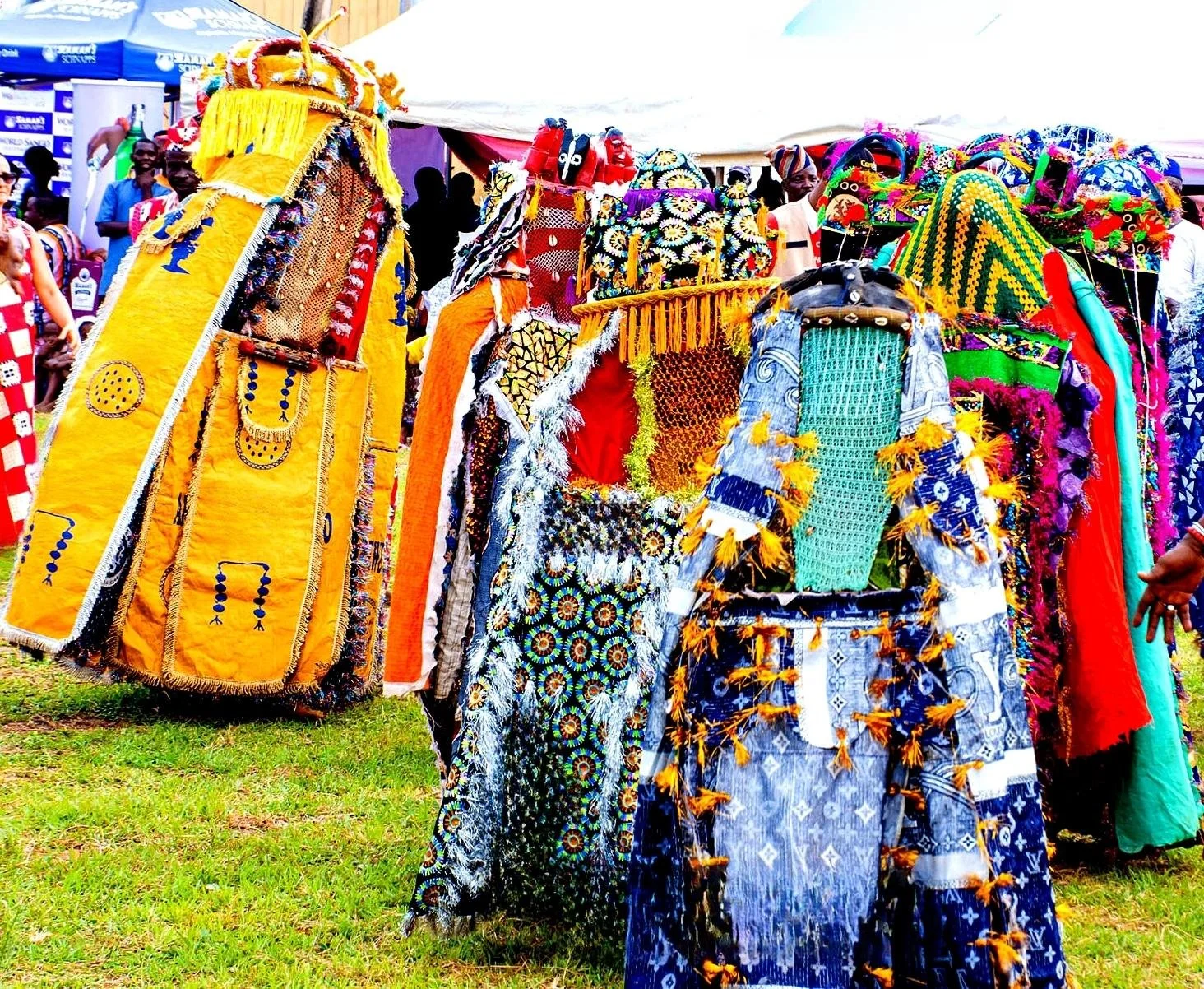
Every August, the ancient town of Gbongan in Osun State takes on a different atmosphere as drums, traditional songs and colourful masquerades signal the return of one of its most cherished cultural traditions, the annual Egungun celebration.
For the people of Gbongan, the Egungun festival is more than the appearance of masquerades on the streets. It is a tradition deeply connected to the town’s history, families, traditional institutions and ancestral heritage, with practices that have been passed from one generation to another.
The roots of Egungun in Gbongan can be traced deep into the history of the town and the tradition of the Olufi. Historical research by Oba Dr S. O. Babayemi connects Egungun with the early history of the Olufi and records Egungun families such as Esarun and Agbooye in relation to the Olufi’s movement from the Old Oyo area. His account also records the existence of an Igbo Igbale, or Egungun grove, around the traditional palace area, reflecting the importance of the tradition in the early organisation of Gbongan. The Owu people who later settled with the Olufi also brought their own Egungun tradition, known as Eebele.
That historical background remains visible in the way the festival is organised today. The celebration does not simply begin with masquerades appearing on the streets. There is a traditional process leading to the annual event, beginning with the approval of the Olufi of Gbonganland.
The date for the celebration is approved by the Olufi, after which the Baba Idi Igbale obtains the approved date and letter from the king. Baba Idi Igbale plays an important coordinating role in the Egungun tradition and observes a period of staying indoors for some days as part of the preparations before the public appearance of the masquerades.
Then comes one of the distinctive traditional moments of the celebration is “ Gbaaja”, also known as “Daale Egun”. The ceremony takes place at night, a day before the Egungun appears publicly. The following day, during daylight, the masquerades come out and the main public activities begin.
The annual celebration was traditionally spread across several days, with Egungun appearing each day. In recent times, however, the public celebration has become concentrated mainly on Saturday and Sunday. Despite the change in duration, the essential tradition remains part of Gbongan’s cultural life.
As the Egungun make their appearances, they move through different parts of the community and visit families. The masquerades that come out on a particular day eventually meet at Oja Alé, which serves as an important gathering point during the celebration. Academic research on Egungun performance in Gbongan also documents Oja Alé as part of the traditional movement and performance of the masquerades and identifies family visitation as an important aspect of the celebration.
At the heart of the tradition are the families known collectively as Olóè. Egungun is preserved through different family compounds in Gbongan, including Ile Agbooye, Ile Eedun, Ile Oluoje Apata, Ile Asoro, Ile Asalu, and Ile Esarun, among others.
The family connection is not a recent development. Historical research also identifies Agbooye and Esarun among the Egungun families associated with the early history of Gbongan, showing that the family-based nature of the tradition has deep roots in the town.
EGUNGUN FESTIVAL IN GBONGAN: A TRADITION ROOTED IN HISTORY AND ANCESTRAL HERITAGE Among those known are Alapata, Gbakulado, Anamo, Egere, Ladojo, Ijakumo, Lemonjagba, Oyin, Agbon, Lemonjagba Ile Asoro, Eye Nfodo, Obadimeji, Orunwomi, Bibeledun Nbe, also known as Edungbemi, Topola, Dankandankan, Abooyinwo, Eesu, Eta-Oko, Osusu Owo, Ajia, Owolanke, Abalaye, Kanmololu, Jenbola, Ajanaku, Arobamaja, Okoto, Etiyeri and Arekeyo, among others.
The list does not necessarily represent the complete number of Egungun associated with Gbongan, as other names remain to be identified and documented. Some of the names are also reflected in historical records. Babayemi’s research, for instance, specifically discusses Kanmololu in connection with Gbongan, while historical documentation of the wider Oyo tradition also records Lemojagba in Gbongan.
Beyond the colourful costumes and public performances, the Egungun tradition provides a link between the living community and its ancestral heritage. It gives families an opportunity to maintain customs inherited from their forebears while allowing younger generations to witness and participate in a tradition that forms part of Gbongan’s identity.
The festival also brings together several layers of traditional authority and community life from the approval of the Olufi, to the preparations overseen through the Egungun institution, the Oloje families, the night-time Daale Egun, the appearance of the masquerades and their eventual gathering at Oja Alé.
Although the way the celebration is organised has changed over time, particularly in the number of days on which Egungun now publicly appears, the tradition itself continues to hold a significant place in Gbongan.
For Gbongan, therefore, the annual Egungun celebration is not merely a spectacle of masquerades and festivities. It is a living record of the town’s history, a reflection of its family heritage and an expression of a cultural tradition that continues to connect the present generation with those who came before them.
And every August, as the drums sound and the Egungun return to the streets, Gbongan’s ancestral heritage once again comes alive.
Leave a Reply