
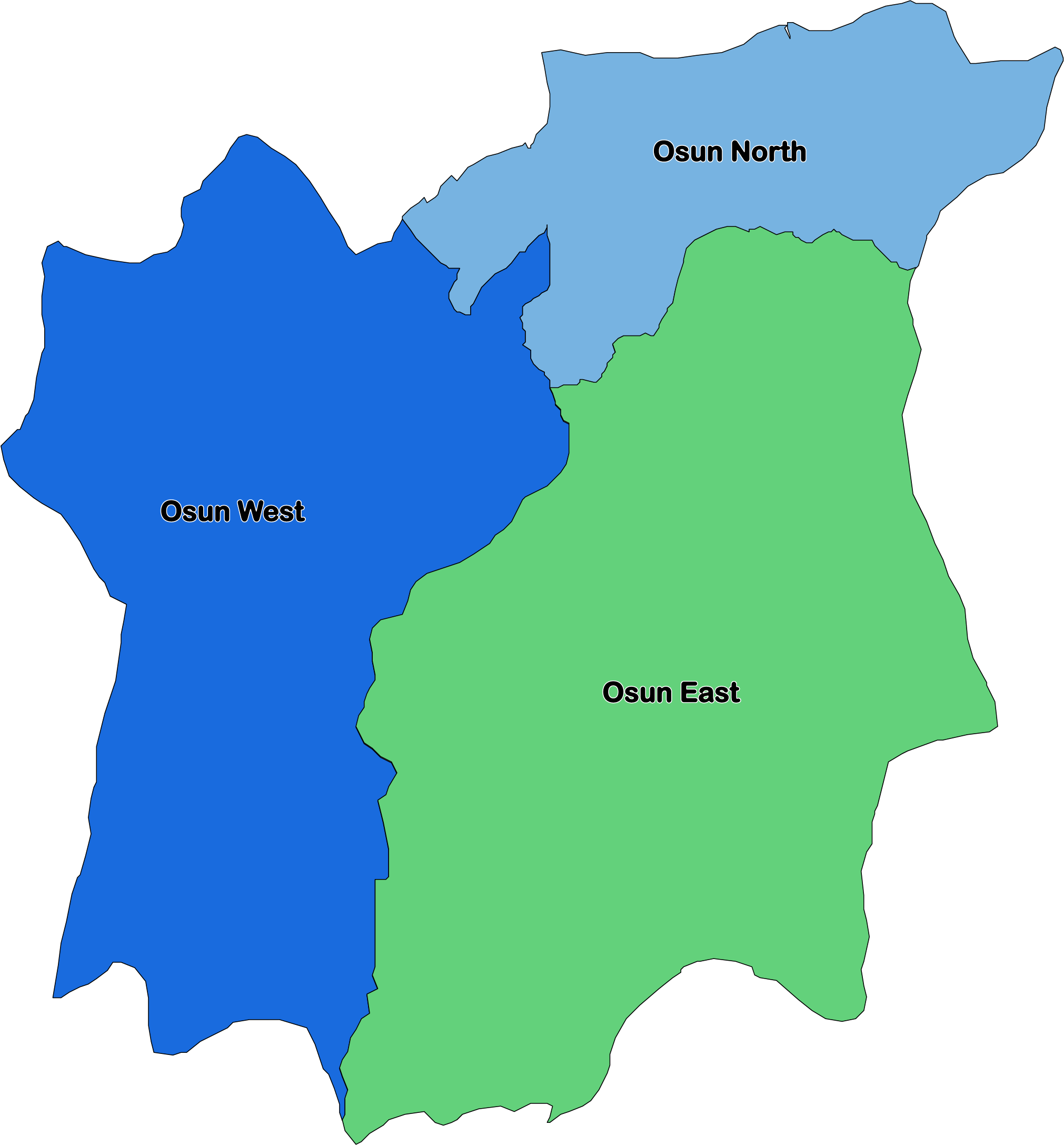
Osun State, today marking 35 years since its creation, celebrating more than three decades of cultural heritage, resilience, development and contributions to Nigeria’s socio-economic growth.
The state was created on August 27, 1991, from the old Oyo State by the Federal Military Government under the leadership of the then Head of State, General Ibrahim Badamasi Babangida. The anniversary therefore marks 35 years of Osun as a distinct administrative entity.
The anniversary celebration is separate from the annual Osun-Osogbo Festival, which was held from July 27 to August 7, 2026, in Osogbo.
Governor Ademola Jackson Nurudeen Adeleke has, as part of activities marking the anniversary, addressed the people of the state, reflecting on Osun’s journey, recent developments and the prospects for its future.
Historical Background
The agitation for an independent administrative area in the region dates back to the 1950s. In 1951, the demand was formally presented before the H. L. Butcher Commission of Inquiry.
Four decades later, the demand culminated in the creation of Osun State on August 27, 1991. Osogbo was subsequently established as the state capital.
Located in southwestern Nigeria, Osun is bordered by Oyo State to the west, Kwara State to the north, Ekiti and Ondo states to the east, and Ogun State to the south.
The state derives its name from the River Osun, a major river with significant cultural, spiritual, agricultural and tourism importance.
Osun is popularly known as the “State of the Living Spring” because of its rivers and springs. It is also strongly identified with the Yoruba concept of Omoluabi, which represents good character, integrity, respect, responsibility and proper upbringing.
A Rich Yoruba Heritage
Osun State is predominantly Yoruba-speaking and contains several major Yoruba cultural groups, including the Ife, Ijesa, Oyo and Igbomina communities.
Ile-Ife, one of the state’s most prominent historical cities, is widely regarded in Yoruba tradition as an ancient spiritual and ancestral centre associated with the development of Yoruba civilisation.
The state is also home to several traditional institutions, including the Ooni of Ife, Ataoja of Osogbo, Oluwo of Iwo, Owa Obokun of Ijesaland and Akarun of Ikirun.
Osun-Osogbo Sacred Grove
One of Osun’s most internationally recognised cultural landmarks is the Osun-Osogbo Sacred Grove, located in Osogbo along the Osun River.
The sacred grove is associated with the Osun deity and is traditionally linked with fertility, love, water and prosperity. It was designated a UNESCO World Heritage Site in 2005.
The annual Osun-Osogbo Festival, held in August, attracts worshippers, tourists, cultural enthusiasts and visitors from different parts of Nigeria and beyond.
Other notable cultural festivals in the state include the Olojo Festival in Ile-Ife, Iwude Festival in Ilesa, Egungun Festival and Isinro Festival in Ila-Orangun.
Agriculture and Natural Resources
Agriculture remains an important part of Osun’s economy, supported by its fertile land and tropical climate.
The state produces crops such as cocoa, maize, cassava, oil palm, vegetables, yam, rice, plantain and fruits. Cocoa production is particularly significant in several communities.
Osun is also endowed with mineral resources, with gold and kaolin among the notable deposits found in the state. Mining therefore remains an important part of the state’s economic potential, although illegal and unregulated mining continues to present environmental and regulatory challenges.
Education and Human Capital
Osun has developed a reputation as an important educational centre in southwestern Nigeria.
Major institutions in the state include Obafemi Awolowo University, Ile-Ife; Osun State University (UNIOSUN); Osun State Polytechnic, Iree; and Ilesa College of Health Technology, alongside several colleges of education, nursing institutions and private universities.
UNIOSUN, the state-owned public university, has campuses and study locations across different parts of Osun.
Major Cities and Their Identities
Osogbo, the state capital, is known for government institutions, commerce, arts, culture and the Osun-Osogbo Sacred Grove.
Ile-Ife is recognised for Yoruba history, archaeology, traditional institutions, arts and Obafemi Awolowo University.
Ilesa is noted for Ijesa culture, commerce, education and mining activities.
Ede is an important commercial and educational centre, while Iwo is known for agriculture and commerce.
Ikire occupies an important position along the southern and western corridor of the state, while Ikirun and Ila-Orangun are also recognised for their traditional, historical and commercial significance.
Economy and Development
Osun’s economy is driven by agriculture, trading, small businesses, mining, education, tourism, services and manufacturing.
The state also has opportunities in tourism, information and communication technology, agro-economy and mining.
Its proximity to major commercial centres such as Ibadan and Lagos provides opportunities for the movement of agricultural produce and other goods into larger markets.
Language and Culture
Yoruba is the dominant indigenous language in Osun State, although different communities have variations in pronunciation, vocabulary and expression.
Ijesa, Ife, Igbomina and Oyo-influenced varieties of Yoruba can be heard across different parts of the state. English remains the official language used in government, education and formal business.
The state’s food culture also reflects its Yoruba heritage, with popular dishes including amala, ewedu, gbegiri, efo riro, pounded yam, rice, beans, yam and plantain.
Geography and Environment
Osun lies largely within Nigeria’s tropical rainforest zone, although northern parts of the state have characteristics of the forest-savanna transition.
The state has numerous rivers, streams, hills, forests and farmlands. Major rivers include the River Osun, River Erinle and River Oba.
Notable hills and elevated areas can also be found around communities such as Ikirun, Iragbiji, Ilesa, Ikire and Ile-Ife.
Political Development
Since its creation in 1991, Osun has been governed by different political parties and administrations.
Notable former governors include Isiaka Adeleke, Bisi Akande, Olagunsoye Oyinlola, Rauf Aregbesola and Gboyega Oyetola.
The current governor, Senator Ademola Adeleke, was sworn into office on November 27, 2022.
Challenges and Prospects
Despite its rich cultural heritage and economic potential, Osun continues to face challenges including unemployment and underemployment, infrastructure deficits, road maintenance, electricity challenges, poverty, limited industrialisation, illegal mining and environmental concerns.
The state also faces the need to strengthen agricultural value chains and create more opportunities for young people to reduce migration in search of employment and better opportunities.
However, these challenges also present opportunities for investment, innovation and sustainable development.
Celebrating 35 Years
As Osun marks its 35th anniversary, the celebration provides an opportunity to reflect on the state’s journey from its creation in 1991 to its present position as a culturally significant and economically promising state in southwestern Nigeria.
With its rich Yoruba heritage, natural resources, educational institutions, tourism assets and entrepreneurial population, Osun continues to look toward a future driven by development, investment, cultural preservation and opportunities for its people.
Thirty-five years after its creation, Osun remains a state defined by its heritage, resilience and enduring identity as the “State of the Living Spring.”
Leave a Reply