
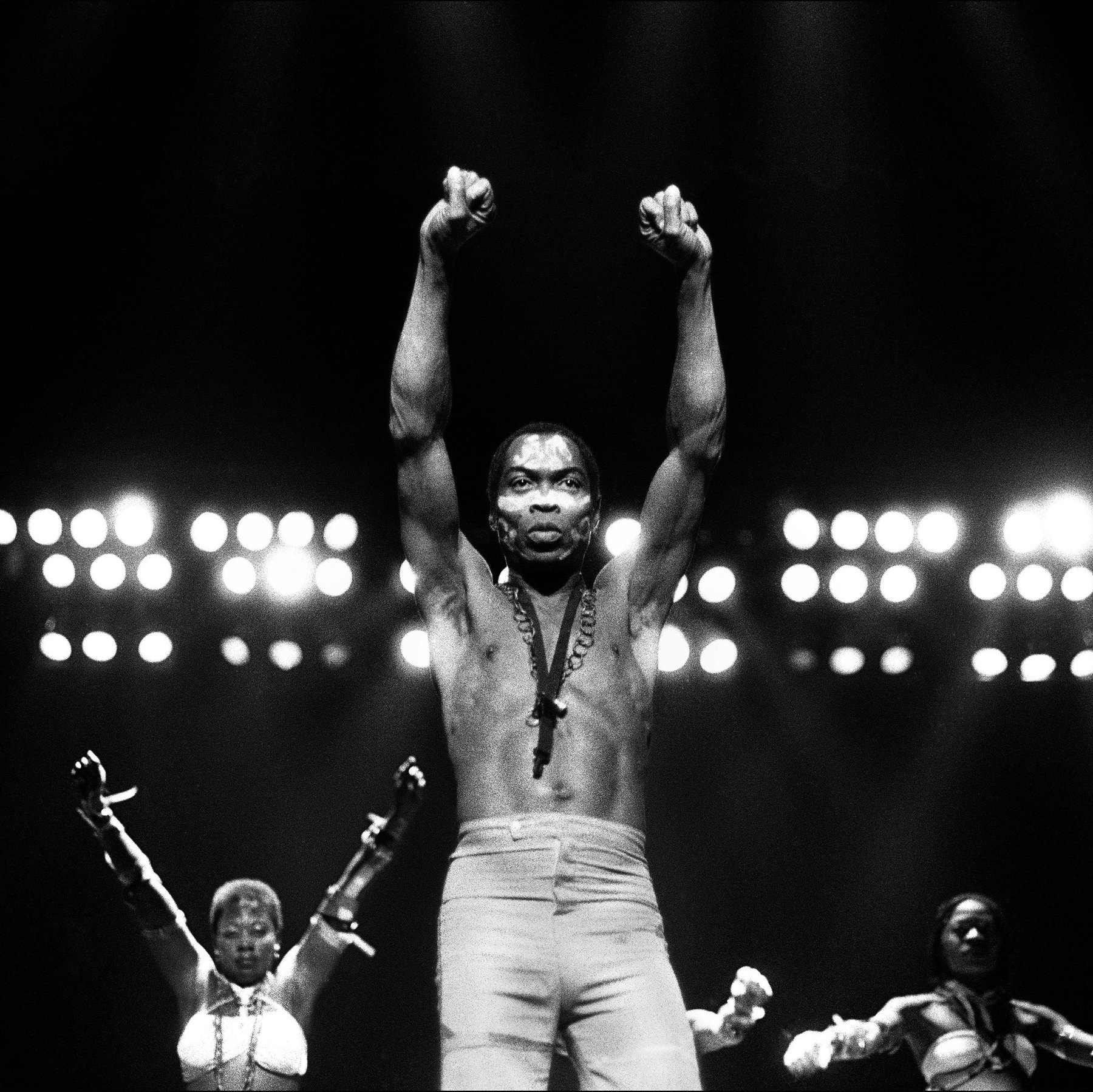
Fela Anikulapo-Kuti was one of Nigeria’s most influential musicians, activists and cultural figures, whose music became a powerful instrument for challenging political oppression, corruption, injustice and abuse of power. Born Olufela Olusegun Oludotun Ransome-Kuti on October 15, 1938, in Abeokuta, Ogun State, he came from one of Nigeria’s most prominent activist and intellectual families. His mother, Funmilayo Ransome-Kuti, was a major anti-colonial activist and women’s rights campaigner, while his father, Reverend Israel Oludotun Ransome-Kuti, was an educator, clergyman and musician. Fela’s upbringing therefore exposed him to both music and political consciousness from an early age.
Fela eventually travelled to London in 1958 to study music at Trinity College of Music, now Trinity Laban Conservatoire of Music and Dance. Instead of following the medical career his parents had hoped for, he immersed himself in music, studying classical music and developing an interest in jazz. While in London, he formed Koola Lobitos, a band that initially combined jazz and highlife. His experiences abroad, however, would eventually transform both his music and his political thinking.
A major turning point came during his 1969 visit to the United States with his band. There, Fela encountered the ideas of the Black Power and civil-rights movements and became particularly influenced by activists and thinkers including Malcolm X, Angela Davis and Stokely Carmichael. His interaction with Sandra Smith, later known as Sandra Izsadore, also played an important role in exposing him to Black political thought. When he returned to Nigeria, his music and worldview had changed considerably.
It was during this period that Fela developed Afrobeat, the musical style for which he became internationally famous. Afrobeat brought together West African musical traditions, highlife, jazz, funk, soul and complex African rhythms. His longtime drummer and musical collaborator Tony Allen was crucial to the development of the sound; Allen worked with Fela for about 15 years and became one of the principal architects of Afrobeat’s distinctive rhythmic foundation.
But Fela’s music was never simply about dancing. He turned songs into political commentary. He sang about corruption, poverty, police brutality, military dictatorship, social inequality and the abuse of power. He frequently performed in Pidgin English and Yoruba, allowing his message to reach ordinary Nigerians and audiences across West Africa. Songs such as “Zombie,” “Coffin for Head of State,” “V.I.P. (Vagabonds in Power),” “Authority Stealing,” “Sorrow, Tears and Blood” and “Beasts of No Nation” became closely associated with his criticism of government and political oppression.
His song “Zombie”, for example, attacked the blind obedience of Nigerian soldiers, using the image of a zombie who simply follows commands. The song became enormously popular but also intensified Fela’s confrontation with the military authorities. His political music made him a target of successive Nigerian military governments. According to biographical accounts, he was arrested numerous times and subjected to beatings and harassment because of his activism and music.
Fela’s Lagos home, known as Kalakuta Republic, became an important part of his identity and political resistance. He described it as an independent community outside the control of the Nigerian government, where his family, musicians and associates lived. His club, the Afrika Shrine, also became a major centre for his performances and political expression. Fela’s performances could last for hours, combining music, dancing, satire and political commentary.
The conflict between Fela and the Nigerian authorities eventually became extremely violent. The military raided Kalakuta on several occasions, with the 1977 attack becoming the most notorious. Soldiers destroyed the compound and violently assaulted people there. Fela’s mother, Funmilayo Ransome-Kuti, was thrown from a window during the attack and suffered injuries from which she later died. Fela responded by carrying his mother’s coffin to the military-controlled government establishment, an act that became one of the most powerful political statements of his career and inspired his song “Coffin for Head of State.”
Fela’s political activism went beyond his songs. He formed his own political movement and later established the Movement of the People (MOP) political party. He wanted to challenge the political system and create an alternative based on his own ideas about African identity, self-determination and governance. His political beliefs could be controversial, unconventional and sometimes contradictory, but there was no doubt that he wanted to challenge the political establishment rather than simply work within it.
His personal life was equally controversial. Fela practised polygamy and in 1978 married 27 women in one ceremony, many of whom were dancers and members of his entourage. He later divorced them. His lifestyle, political beliefs, use of marijuana, views on sexuality and relationships with women have all remained subjects of debate. This is important because Fela’s legacy should not be presented as if he was universally admired or without contradictions. He was a revolutionary artist, but he was also a deeply controversial and complicated individual.
In 1984, Fela was arrested and imprisoned after being convicted of a currency-related offence while attempting to travel. The case attracted international attention, and Amnesty International raised concerns about the fairness of his trial and the possibility that the prosecution was politically motivated. He spent more than a year in prison before being released.
Despite years of harassment, imprisonment and violence, Fela continued performing and recording music. His refusal to stop criticising those in power became one of the defining characteristics of his career. He eventually became an international symbol of resistance, with his music reaching audiences far beyond Nigeria.
Fela died in Lagos on August 2, 1997, at the age of 58. His death was officially associated with complications from AIDS. His funeral drew an enormous crowd, with accounts estimating that roughly one million people gathered to pay their final respects.
His death did not end his influence. His children Femi Kuti and Seun Kuti became musicians and continued aspects of his Afrobeat tradition, while his daughter Yeni Kuti became an important custodian of his cultural legacy. Fela’s music has also influenced musicians and artists around the world, while the New Afrika Shrine and annual Felabration have helped keep his memory and music alive.
Interestingly, Fela’s international recognition has continued to grow decades after his death. In 2026, he received the Grammy Lifetime Achievement Award, becoming the first African artist to receive that particular honour. He was also inducted into the Rock & Roll Hall of Fame in 2026 in the Musical Influence category, with the Hall recognising his role in pioneering Afrobeat and using music as a vehicle for social and political change.
What makes Fela Anikulapo-Kuti particularly important in Nigerian history is therefore not simply the number of songs or albums he released. His significance lies in the way he connected music with politics, African identity, resistance and ordinary people’s struggles. He demonstrated that a musician could become a political force and that popular music could challenge those in power. His life also shows the complicated relationship between art, activism, personal freedom and controversy.
Today, Fela remains one of the most recognisable Nigerian cultural figures in the world. His name is associated with Afrobeat, the Afrika Shrine, Kalakuta Republic, political resistance and fearless criticism of government. More than two decades after his death, his music continues to be listened to, studied and performed, while his children and other musicians continue to extend the musical tradition he helped create. The fact that major international institutions are still honouring him in 2026 shows how far the influence of the man once regarded by Nigerian authorities as a troublesome dissident has travelled.
Leave a Reply