
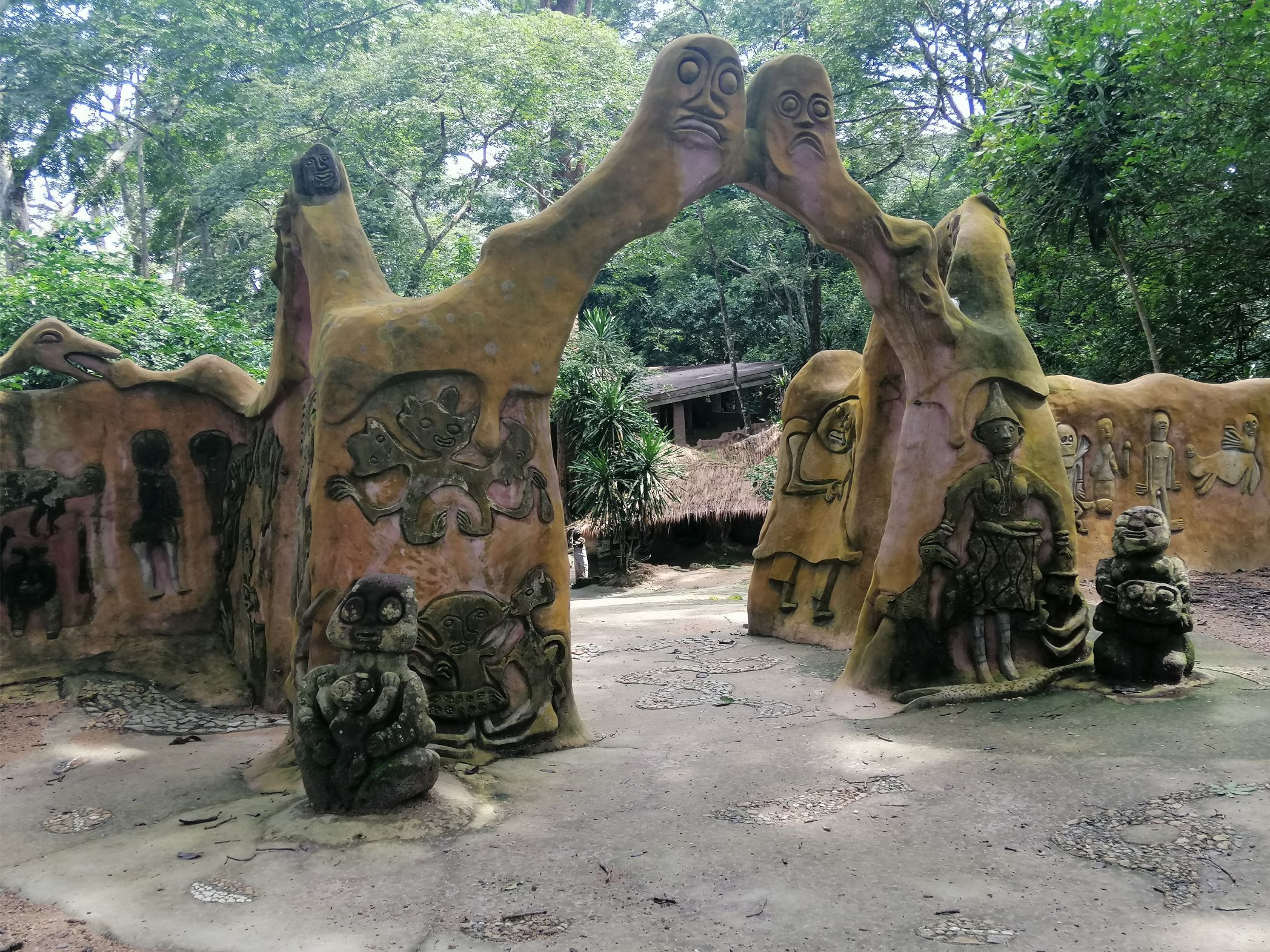
For generations, the Osun-Osogbo Sacred Grove in Osogbo, Osun State, has remained one of the most important centres of Yoruba cultural and spiritual heritage.
At the heart of the grove is the Osun River, around which several shrines, sacred spaces and remarkable sculptures have been established. For visitors, some of the enormous sculptures may appear mysterious at first. Some portray women, men, animals or spiritual figures, while others form part of unusual shrine structures.
But these works are not simply decorations.
They are connected to Yoruba religious traditions, stories, deities and the sacred landscape of Osun-Osogbo.
Many of the monumental works visible today are associated with the New Sacred Art movement, particularly the work of Susanne Wenger and Osogbo artists who worked with traditional custodians to restore old shrines and create new sacred artworks.
Here are some of the important statues and sacred structures found within the grove and the stories behind them.
- Ọ̀ṣun Statue at the River Altar
One of the most recognisable sculptures in the grove is the Ọ̀ṣun Statue at the River Altar, created by Osogbo artist Saka Aremu in the early 1970s.
The statue depicts Ọ̀ṣun standing on a fish at a bend in the river outside the main Ọ̀ṣun shrine, known as Ibú Ojúbọ Òṣogbo. The location is significant because the annual Osun-Osogbo Festival reaches its climax around this sacred part of the river.
The sculpture’s position on the river is also meaningful. Ọ̀ṣun is traditionally associated with the river, fertility and the life-giving power of water. The fish beneath her connects the figure directly to the aquatic world and reinforces the relationship between the goddess and the river.
Depending on the water level, the statue can sometimes be partly surrounded or covered by the river, making it appear to emerge directly from the sacred water.
Meaning: The statue represents Ọ̀ṣun’s connection with the river, water, fertility and the spiritual life of the grove.
- Ọ̀ṣun Lákọkàn
Ọ̀ṣun Lákọkàn is a documented river shrine and altar within the sacred grove.
Its story is connected to a traditional account involving a hunter who encountered the Osun River as an epiphany of the goddess Ọ̀ṣun at that location. The story therefore links the shrine to the traditional understanding of the river as a place where the human and spiritual worlds can meet.
The shrine was conceived and executed by Susanne Wenger, while Kasali Akangbe worked on its roof construction.
Meaning: The shrine represents the traditional encounter between the human world and Ọ̀ṣun through the sacred river.
- Busanyin Shrine
Standing directly beside the Osun River is the remarkable Busanyin Shrine, also known as Ibu-Osanyin.
Heritage documentation describes Busanyin as a male hunter spirit associated with knowledge of herbs and traditional medicine. The shrine itself is one of the most unusual structures in the grove, taking the form of a large bird facing the river.
A gradual slope leads from the shrine towards the water, reinforcing the close relationship between the sacred structure and the river.
Traditionalists and priests visit the shrine for worship, while water from the river in front of the shrine is associated with traditional ritual practices.
The shrine has also faced environmental challenges. Severe flooding in 2019 damaged the structure and some of its artworks, highlighting the vulnerability of sacred sites located close to the river.
Meaning: The Busanyin Shrine represents the connection between hunting, herbal knowledge, traditional medicine and the sacred river.
- Ọ̀gún and His Entourage
The sacred grove also contains sculptures associated with Ọ̀gún, one of the major Yoruba deities.
A documented work known as Ọ̀gún and Entourage consists of small cement figures and is identified as an early work by Adebisi Akanji.
There is also a separate statue of Ọ̀gún by Saka Aremu, located at a place where Ọ̀gún worshippers taking part in the annual Osun procession traditionally stop to rest.
The presence of Ọ̀gún demonstrates that the grove is not exclusively dedicated to Ọ̀ṣun. Different Yoruba deities and their traditions are represented within the sacred landscape.
Meaning: The sculptures represent the presence and worship of Ọ̀gún within the wider Yoruba spiritual system preserved at Osun-Osogbo.
- Alájere Dancing for Ọ̀ṣun
Another documented sculpture is Alájere Dancing for Ọ̀ṣun.
Alájere is connected with Yoruba religious traditions surrounding Ṣànpọ̀nná/Obaluaye, and the sculpture depicts Alájere in a dancing posture associated with Ọ̀ṣun.
The work is an example of how the artists of Osun-Osogbo used sculpture to communicate traditional stories and relationships between spiritual figures.
Rather than simply presenting a deity as a static figure, the sculpture uses movement to tell part of a larger spiritual story.
Meaning: The sculpture represents a traditional relationship involving Alájere and Ọ̀ṣun, expressed through movement and dance.
- Idí Èṣù
The grove also contains Idí Èṣù, a documented sculpture associated with Èṣù and attributed to Saka Aremu.
Èṣù occupies an important position in Yoruba religious tradition and is associated with crossroads, communication and mediation between different realms.
The presence of Èṣù in Osun-Osogbo shows that the sacred landscape accommodates several elements of Yoruba spirituality rather than focusing on one deity alone.
Another large stone sculpture of Èṣù is documented near the entrance to the main Ọ̀ṣun shrine.
Meaning: Idí Èṣù represents Èṣù’s important place within Yoruba religious thought and the wider spiritual system represented in the grove.
- Oya and Sàngó
Among the documented works within the grove is an Oya and Sàngó double altar image, created by Kasali Akangbe.
The work represents the traditional relationship between Oya and her husband, Sàngó, and has been described in the heritage documentation as symbolising their ritual and emotional closeness.
Their presence within Osun-Osogbo further demonstrates the variety of Yoruba spiritual figures represented through the grove’s sacred artworks.
Meaning: The work represents the relationship and spiritual connection between Oya and Sàngó.
- Ẹfọ́n — The Buffalo
One of the more unusual sculptures documented in the grove is Ẹfọ́n, represented by a buffalo.
The heritage record identifies Ẹfọ́n as the mythical father of Oya and attributes the sculpture to Ojewale Amoo.
The use of the buffalo is another example of how animals, human figures and spiritual beings are used throughout Osun-Osogbo to express stories within Yoruba mythology.
Meaning: Ẹfọ́n represents the traditional story surrounding Oya and her mythical father.
- Òjùbọ̀ Òṣogbo — The Main Ọ̀ṣun Shrine
At the centre of Ọ̀ṣun worship in the grove is Òjùbọ̀ Òṣogbo, the main shrine dedicated to Ọ̀ṣun.
The shrine is surrounded by monumental sculptural works associated with the New Sacred Art movement. Its sculpted pillars have been interpreted as expressing the regenerative cycle of birth, decline, decay and rebirth, reflecting ideas associated with Ọ̀ṣun’s regenerative power.
The shrine demonstrates perhaps more clearly than anywhere else in the grove that the sculptures are part of an active sacred environment rather than an ordinary collection of artworks.
Meaning: Òjùbọ̀ Òṣogbo is the central sacred space dedicated to Ọ̀ṣun and represents the continuing relationship between the deity, worshippers and the grove.
The Artists Behind the Sacred Sculptures
Many of the monumental sculptures visitors see today are associated with the New Sacred Art movement that developed in Osogbo during the 20th century.
One of its most prominent figures was Susanne Wenger, who worked closely with Osogbo artists and traditional custodians.
Artists including Saka Aremu, Adebisi Akanji, Buraimon Gbadamosi, Kasali Akangbe and Ojewale Amoo contributed to the restoration and creation of sacred artworks within the grove.
Their work brought together Yoruba religious traditions, local artistic knowledge and monumental sculpture, creating the distinctive visual character for which Osun-Osogbo is known today.
Why These Statues Matter
The statues and shrines of Osun-Osogbo cannot be fully understood simply as works of art.
They are part of a sacred environment in which religion, history, nature and artistic expression are connected. Some represent individual deities, while others portray relationships, traditional stories or aspects of Yoruba cosmology.
The Osun River provides the natural setting, the forest protects the shrines, and the sculptures give physical form to stories that have been preserved through generations.
A Heritage Protected for Future Generations
The Nigerian Government declared the Osun-Osogbo Sacred Grove a National Monument in 1965. On 15 July 2005, the grove was inscribed on the UNESCO World Heritage List in recognition of its outstanding cultural significance.
The UNESCO recognition further established the importance of the grove as a surviving example of the sacred forests historically associated with Yoruba settlements.
Today, Osun-Osogbo remains a place of worship, cultural identity, artistic expression and heritage conservation.
For visitors, the sculptures may initially appear mysterious or simply beautiful. But when their names and stories are understood, they become something more: physical expressions of Yoruba history, spirituality, mythology and the enduring relationship between people, nature and the sacred.
The statues of Osun-Osogbo are therefore more than objects to be photographed. They are part of a living heritage that continues to tell the story of Yoruba culture.This is the version I’d submit. It keeps the statues/shrines article separate from the full Osun River history, while still giving readers enough river context to understand why the sculptures are there.
Leave a Reply