
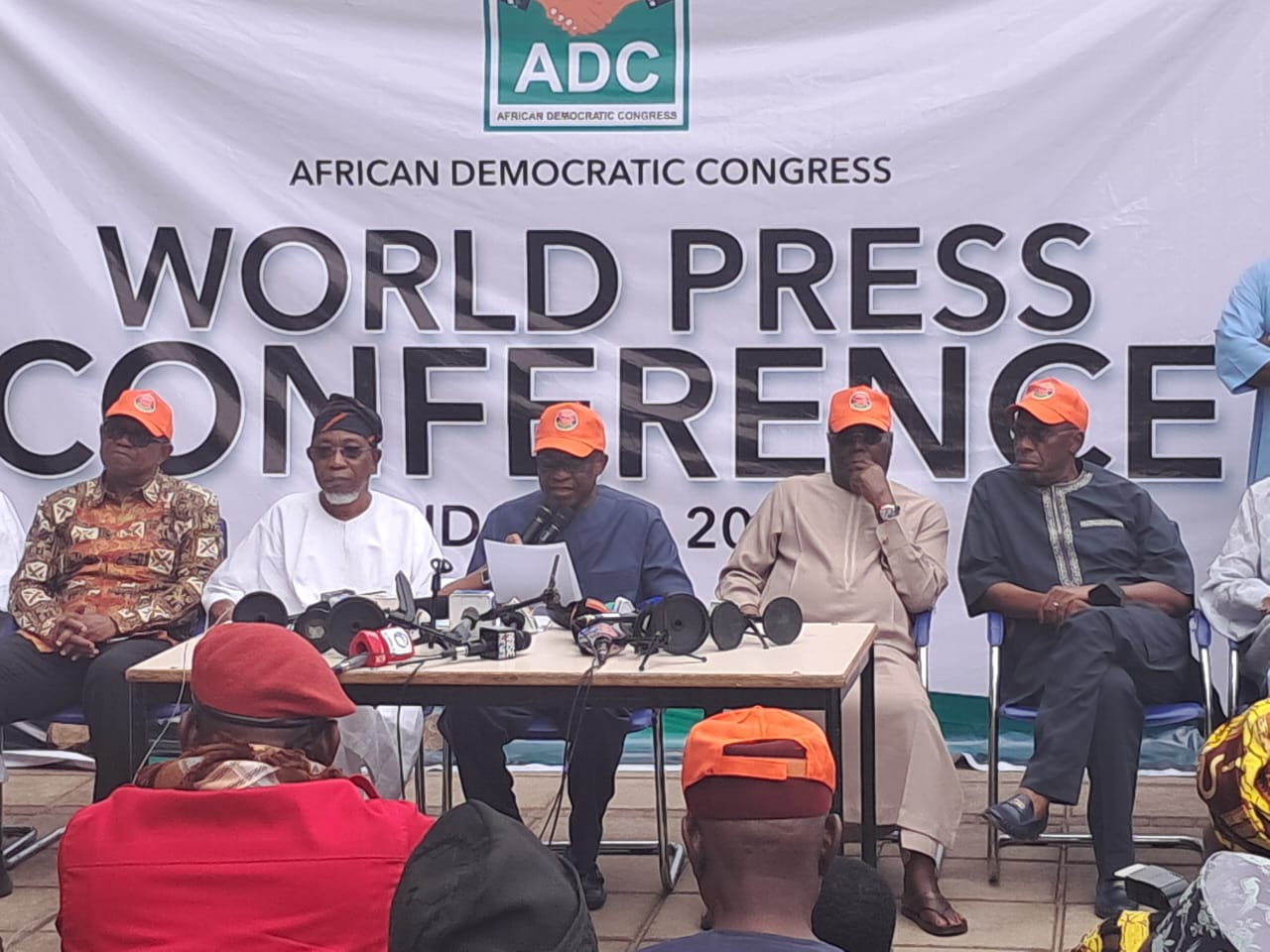
The African Democratic Congress (ADC) has questioned the timing of the Federal Government’s $1 billion Renewed Hope Social Protection Programme, alleging that the initiative is a reaction to its presidential candidate Atiku Abubakar’s proposal for a targeted subsidy to reduce the cost of living.
The Federal Government launched the programme on Wednesday, with First Lady Oluremi Tinubu unveiling the initiative at the Presidential Banquet Hall in Abuja. The government said the programme is designed to strengthen social protection, support vulnerable households and move beneficiaries from temporary relief towards economic empowerment and self-reliance.
The initiative includes the Household Prosperity and Economic Social Protection Project (HOPE-SP), which targets about 7.6 million vulnerable households across the country. Eligible households are expected to receive a one-off digital shock-response cash transfer of ₦40,000.
According to the Federal Government, beneficiaries will be selected from the National Social Register and verified with their National Identification Numbers (NINs) as part of measures to improve transparency and ensure that support reaches genuine beneficiaries.
The government has also introduced the One Humanitarian, One Poverty Response System, designed to coordinate humanitarian assistance, social protection and poverty-reduction interventions while tracking vulnerable households as they progress towards self-reliance.
However, the ADC criticised the timing of the programme, saying the government had spent three years asking Nigerians to endure the effects of its economic reforms before suddenly unveiling a major intervention as the 2027 general election approaches.
In a statement signed by its National Publicity Secretary, Bolaji Abdullahi, the opposition party questioned where the government obtained the funds and demanded greater clarity on how the programme would be financed and administered.
The ADC also linked the intervention to Atiku’s proposal for a targeted production subsidy aimed at reducing production costs and bringing down the prices of goods and services.
The party said the Tinubu administration had previously rejected the idea of subsidy in any form, but had now acknowledged the need to protect Nigerians from the economic shocks associated with its reforms, including fuel subsidy removal.
The opposition party further questioned the Federal Government’s claim that more than ₦600 billion had been disbursed as cash transfers to vulnerable Nigerians over the past three years, demanding greater transparency on the beneficiaries and impact of the spending.
ADC also raised concerns over the proposed ₦40,000 shock-response payment, arguing that a one-off intervention would not adequately address the broader effects of higher food, fuel, transportation and energy costs.
While the party said it supports genuine efforts to protect vulnerable Nigerians, it maintained that palliatives cannot replace economic policies capable of restoring purchasing power, increasing production and improving living standards.
The Federal Government, however, maintains that the new social protection framework is intended to move beyond temporary relief by creating a coordinated system that supports vulnerable households and helps them transition towards sustainable economic participation.
The controversy comes as political parties and opposition figures increasingly position economic policy and the cost of living at the centre of the debate ahead of the 2027 general elections.
Leave a Reply