
Nigeria is stepping up efforts to build its own artificial intelligence capabilities and digital infrastructure as the Federal Government seeks to transform the country from a major consumer of foreign technology into a producer of home-grown digital solutions.
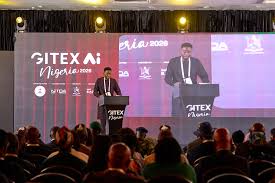
The push was highlighted at GITEX Nigeria 2026 in Abuja, where government officials, technology leaders, investors and other stakeholders called for stronger investment in indigenous innovation, computing infrastructure, technical skills and locally controlled data.
The Secretary to the Government of the Federation, Senator George Akume, said Nigeria must move beyond basic internet connectivity and develop the domestic capabilities required to achieve President Bola Tinubu’s $1tn economic ambition.
According to Akume, Nigeria’s opportunity lies in developing its own talent, infrastructure and artificial intelligence systems that can address local needs while also competing in the global technology market.
The call reflects a growing concern among policymakers that dependence on foreign-owned technology could leave Nigeria vulnerable when critical digital systems, data and computing infrastructure are controlled outside the country.
The Director-General of the National Information Technology Development Agency, Kashifu Inuwa Abdullahi, said achieving genuine digital sovereignty would require Nigeria to own the capabilities, infrastructure and intelligence that power its digital future.
He pointed to government initiatives including Digital Literacy for All, the 3 Million Technical Talent programme and Project BRIDGE as part of efforts to expand the country’s technology talent pool and digital infrastructure.
Why Nigeria wants greater control of AI
The AI push goes beyond simply developing chatbots or other consumer-facing applications. Stakeholders say Nigeria needs the infrastructure to store and process its own data, train and deploy AI systems and ensure that technologies used in sensitive areas operate within Nigerian laws and regulations.
NITDA has warned that excessive dependence on AI systems developed and controlled outside Nigeria could create risks for the country’s economic and digital sovereignty, particularly as artificial intelligence becomes increasingly important to sectors such as finance, healthcare, education and government.
Lagos State Governor Babajide Sanwo-Olu also highlighted the infrastructure gap facing Africa, noting that much of the continent’s AI workload is currently processed outside the continent.
He argued that Nigeria’s strong subsea cable connectivity, particularly in Lagos, could become a major advantage if the country develops enough data centres and computing infrastructure to process AI workloads locally.
This means the country’s AI ambition will depend not only on software developers but also on reliable electricity, high-speed connectivity, cloud infrastructure, data centres, cybersecurity and a strong regulatory environment.
The Federal Government is also working towards expanding digital connectivity. A planned nationwide 90,000-kilometre fibre-optic network is expected to strengthen the infrastructure needed for artificial intelligence, cloud services, data centres and other digital technologies.
Meanwhile, GITEX Nigeria 2026 is bringing together technology companies, startups, investors and policymakers across Abuja and Lagos from August 31 to September 3. The event is focusing on artificial intelligence, cybersecurity, cloud computing, digital infrastructure and the future of the African technology economy.
For Nigeria, the ambition is increasingly clear: rather than simply importing AI products developed elsewhere, the country wants to build the talent, infrastructure and systems needed to develop technologies suited to its own population and eventually export them to other markets.
If successfully implemented, the strategy could create opportunities for Nigerian startups, software developers, data scientists, engineers and technology companies while opening new markets for locally developed digital products.
It could also strengthen Nigeria’s position in Africa’s rapidly expanding AI economy and support the government’s broader goal of using technology as a driver of productivity, investment and economic growth.
However, achieving that ambition will require sustained investment and coordination. Building sovereign AI capacity is a long-term project that depends on infrastructure, skilled workers, access to computing power, quality data, effective regulation and continued support for local innovators.
With GITEX Nigeria placing digital sovereignty at the centre of its 2026 discussions, the country is signalling that its next phase of technological development will not be measured only by how many Nigerians are connected to the internet, but by how much of the technology powering that connection Nigeria can develop and control itself.
Leave a Reply