
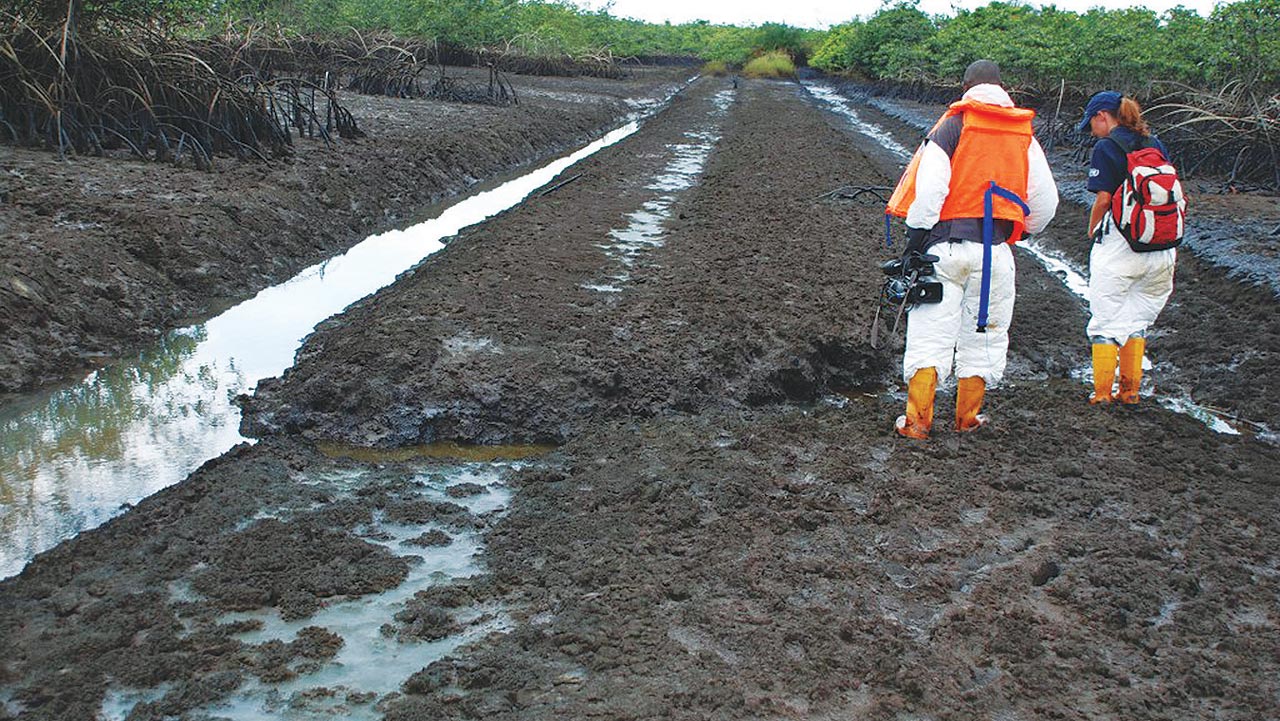
The Federal Government has commenced the second phase of the shoreline cleanup in Ogoniland, Rivers State, reaffirming President Bola Tinubu’s determination to bring the long-running environmental restoration project to completion.
The Minister of Environment, Balarabe Lawal, gave the assurance on Thursday in Bodo City, Gokana Local Government Area of the state, during activities marking the 10th anniversary of the Ogoni Cleanup project and the unveiling of the Ogoni Cleanup Monument.
Lawal said Tinubu remained committed to restoringawall the environment of Ogoniland, noting that the President had issued a directive for the project to be accelerated after assuming office.
He said the Federal Government had recorded progress through the Hydrocarbon Pollution Remediation Project, HYPREP, in areas including soil and groundwater remediation, mangrove restoration, healthcare interventions and the provision of potable water.
According to the minister, several infrastructure projects are also being developed in the region, including the Centre of Excellence for Environmental Restoration, a specialist hostel, a cottage hospital and the Ogoni Power Project.
Lawal said the return of fish, periwinkles, crabs and shrimps to waterways previously affected by pollution was evidence that the ecosystem was gradually recovering.
He also disclosed that four local government areas in Ogoniland had recently received Ramsar accreditation certificates, describing the development as an opportunity to attract international support for wetland conservation.
The minister announced the commencement of the second phase of the shoreline cleanup, explaining that simple and medium-impact remediation sites had been completed, while work would now focus increasingly on more complex sites.
He urged Ogoni stakeholders to work closely with HYPREP and avoid actions capable of disrupting the implementation of the programme.
Speaking at the event, HYPREP Project Coordinator, Prof. Nenibarini Zabbey, said more than 8,500 direct jobs had been created for youths and women in Ogoniland through the project.
Zabbey said 1,420 community workers had also received International Maritime Organisation and Swim Test certificates as part of the second phase of the shoreline cleanup and mangrove restoration programme.
He appealed to residents to protect the recovering ecosystem by avoiding indiscriminate cutting of mangroves and excessive harvesting of aquatic resources.
Zabbey acknowledged that the project had faced challenges, including community disputes, access difficulties and misinformation, but said continued engagement with stakeholders had helped address some of the obstacles.
The Ogoni Cleanup project followed the 2011 assessment by the United Nations Environment Programme, which documented extensive environmental pollution in Ogoniland after decades of oil exploration and production.
The Federal Government said it would continue to support the remediation programme and work with communities and other stakeholders to ensure the restoration of Ogoniland delivers lasting environmental and economic benefits.
Leave a Reply