
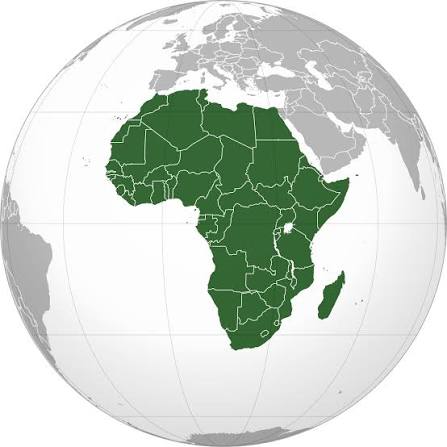
Africa is losing an estimated $74.5 billion in additional debt-service costs due to exaggerated perceptions of risk and credit ratings that may not adequately reflect the continent’s actual repayment performance.
The disclosure was made by the African Export-Import Bank (Afreximbank) at the 2026 Invest Nigeria Conference and Expo in Lagos, where development finance experts highlighted the high cost of borrowing and the need for stronger economic integration across the continent.
Afreximbank’s Director of Regional Operations, Kudakwashe Matereke, said African countries were paying more to access credit despite recording lower infrastructure-loan default rates than several other emerging regions.
Citing a study by Moody’s Analytics, Matereke said the average default rate for infrastructure loans in Africa was about 1.9 per cent, compared with 4.6 per cent in Asia, 10 per cent in Latin America and 12.4 per cent in Eastern Europe.
He said the figures showed a disparity between Africa’s actual credit performance and how the continent is perceived by international lenders and rating agencies.
Matereke said the continent loses an estimated $74.5 billion in additional debt-service costs because of what he described as exaggerated risk perceptions and biased credit ratings.
According to him, subjective credit ratings and existing financial frameworks were contributing to the high cost of capital and making it more expensive for African economies to finance development.
He said reducing borrowing costs could generate significant savings, noting that a two-percentage-point reduction in borrowing costs over three years on an $18.6 billion portfolio could save about $1.12 billion.
Matereke identified expensive credit as one of the major challenges facing African economies, alongside geopolitical conflicts, rising commodity prices, inflation and tighter global financial conditions.
He also disclosed that Afreximbank approved a $10 billion Gulf crisis response programme in March 2026 to support African and Caribbean economies, financial institutions and businesses affected by their dependence on imported fuel, food, liquefied natural gas and fertiliser.
According to him, the programme provides short-term foreign exchange and liquidity support to keep essential supply chains operating, while also providing longer-term financing for regional energy, logistics and port projects.
Matereke added that Afreximbank was using guarantees and other financial instruments to reduce transaction risks, unlock capital and attract international financing into African projects.
The bank is also promoting industrialisation through investments in logistics networks, railways, ports, highways and energy grids, alongside financing, quality standards and regulatory frameworks.
It has established African Quality Assurance Centres to provide testing, inspection and certification services for goods produced on the continent, with two centres already located in Nigeria.
The conference also drew attention to Africa’s relatively low level of trade among its own countries.
The International Finance Corporation’s Division Director for West Africa, Olivier Buyoya, said only about 16 percent of Africa’s exports were traded within the continent at the end of 2025.
In comparison, 67 per cent of exports in Europe and 63 per cent in Asia were traded within their respective regions.
Buyoya said the figures showed the enormous opportunity available through deeper African economic integration.
He pointed to the African Continental Free Trade Area (AfCFTA) as an avenue for creating the scale investors need, while stressing that African countries must translate the agreement into connected markets, competitive value chains and stronger investment opportunities.
According to him, regional integration could allow African countries to specialise in different stages of production, with one country producing goods, another processing them and others providing logistics, technology and related services.
Buyoya said Nigeria was particularly positioned to benefit from deeper regional integration because of its large domestic market.
He noted that Nigerian companies were already expanding across Africa in sectors such as financial services, telecommunications, consumer goods and technology.
Deeper integration, he said, could enable more Nigerian businesses to become regional champions while positioning Nigeria as a platform for international investors seeking access to wider African markets.
He also disclosed that the IFC was supporting supply-chain finance platforms in Nigeria, enabling smaller suppliers to receive early payment on approved invoices and giving them the liquidity needed to fulfil larger orders and participate more effectively in regional value chains.
Buyoya said Africa’s economic ambition should go beyond simply increasing trade to ensuring that the continent captures more value from its agricultural, mineral and energy resources.
The discussions at the conference highlighted two major challenges to Africa’s economic development: the high cost of accessing capital and the continent’s relatively weak intra-African trade.
Development finance officials said addressing risk perceptions, improving credit assessment and strengthening regional economic integration could help unlock more investment, reduce financing costs and support infrastructure and private-sector growth across Africa.
Leave a Reply