

By Durotoye Abiodun Ayinde
There are musicians who sing songs, musicians who entertain audiences, and there are musicians who become institutions. King Sunny Ade belongs to the third category. For generations of Nigerians and lovers of African music around the world, his name has become synonymous with excellence, innovation, longevity and the rich cultural heritage of Yoruba music.
Born Sunday Adeniyi Adegeye in 1946, King Sunny Ade rose from his early musical experiences in Nigeria to become one of the most internationally recognised figures in African popular music. He is particularly celebrated for his contribution to jùjú music, a genre built around intricate rhythms, guitars, talking drums, percussion and Yoruba vocal traditions.

A Musical Journey That Began Early
Sunny Ade’s journey into music began when he was young. He later worked with the legendary Moses Olaiya’s Federal Rhythm Dandies before establishing his own musical group. In the 1960s, he formed the Green Spots, which eventually evolved into the famous African Beats.
The emergence of the African Beats marked an important period in Nigerian music. Sunny Ade was not content with simply following established patterns. He continuously experimented with instrumentation, arrangements and performance, helping to give jùjú music a larger and more sophisticated sound.
The Man Who Expanded the Sound of Jùjú
One of the remarkable things about King Sunny Ade is his ability to embrace innovation without abandoning his cultural roots.
His music brought together talking drums, electric guitars, percussion, keyboards and other modern instruments, while retaining the Yoruba language, rhythms, praise traditions and proverbial expressions that gave jùjú its identity. His use of instruments such as the pedal steel guitar became one of the distinctive elements associated with his sound.
This ability to combine tradition with innovation helped transform jùjú from a predominantly Nigerian musical form into a sound that could be appreciated by audiences far beyond Nigeria.

From Nigeria to the World
The 1980s represented a major international breakthrough for King Sunny Ade. He signed with Island Records and released albums including Juju Music in 1982 and Synchro System in 1983. His international performances and recordings introduced many listeners in Europe and North America to the richness of Nigerian jùjú music.
His international recognition was further demonstrated by Grammy nominations, including recognition for Synchro System and later Odu.
For an African musician singing predominantly in Yoruba, this was significant. It demonstrated that music does not necessarily need to abandon its language or cultural identity before it can cross international boundaries.

More Than Entertainment
Listening to King Sunny Ade is not simply about dancing.
His music carries Yoruba proverbs, praise poetry, social observations, wisdom and cultural expressions. Like many great traditional African performers, he has used music as a vehicle for preserving oral traditions and communicating messages to society.
His songs therefore serve two purposes: they entertain the audience and preserve elements of Yoruba cultural memory.
This is one of the reasons I describe him as an enigma musician.
An enigma is someone whose qualities, depth or uniqueness make them difficult to fully explain. King Sunny Ade fits this description because his career cannot easily be reduced to singing and entertainment. He is a musician, bandleader, cultural ambassador, innovator and one of the important figures in the history of Nigerian popular music.
The Legacy of KSA
King Sunny Ade’s greatest achievement may not be any single song or album. It is the musical pathway he created for generations that followed.
He demonstrated that a Nigerian musician could take a deeply Yoruba musical tradition, modernise its instrumentation and presentation, and still preserve its cultural identity while reaching international audiences.
His career has also been associated with entrepreneurship, record production, performance and efforts to support younger musicians. His influence therefore extends beyond the stage.
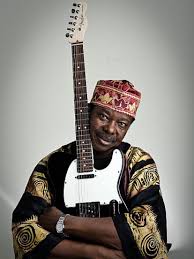
An Icon of Yoruba Music
For many Nigerians, particularly lovers of old-school jùjú music, the mention of KSA immediately evokes memories of guitars, talking drums, dancing, elaborate stage performances and powerful Yoruba lyrics.
But beyond the nostalgia is a larger story.
King Sunny Ade represents a period when Nigerian musicians built careers around live performance, musicianship, originality and cultural expression. His music reminds us that African culture does not have to be hidden in the past; it can evolve, embrace technology and still remain authentically African.
King Sunny Ade is therefore not merely a musician who has enjoyed a long career.
He is part of the history of Nigerian music.
And perhaps that is why, after decades in the music industry, the name King Sunny Ade continues to command respect.
KSA is not just a name in Nigerian music. He is a musical institution.
Leave a Reply