
By: Durotoye Abiodun Ayinde
Nigeria is 66.
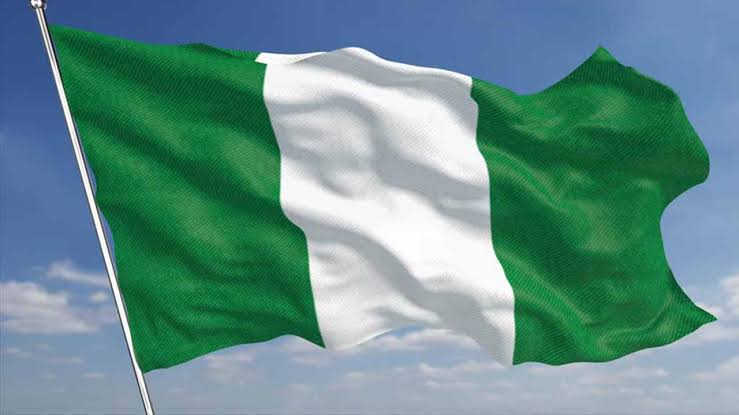
On October 1, 1960, the Nigerian flag replaced the Union Jack, marking the birth of an independent nation with enormous hopes, dreams and expectations.
Sixty-six years later, the question is no longer simply whether Nigeria has survived. The more important question is: Are we where we ought to be at 66?
It is a question that deserves honest reflection rather than political rhetoric.
Nigeria has undoubtedly achieved some significant milestones. The country has survived a civil war, military interventions, political crises and several economic difficulties. Since 1999, democratic governments have succeeded one another through elections rather than military coups. That continuity is itself an important part of Nigeria’s democratic journey.
Nigeria also remains a major force in Africa, with a large population, a huge market, abundant natural resources, a vibrant creative industry and a population of young people capable of innovation and entrepreneurship. International partners continue to regard Nigeria as strategically important to Africa’s stability and economic growth.
But these achievements must be considered alongside the realities facing ordinary Nigerians.
The economy has shown signs of improvement. The World Bank reports that real GDP grew by 4.2 percent in the first half of 2026, while inflation has fallen substantially from its earlier levels. However, the same institution notes that growth has not yet translated sufficiently into productive employment or significant reductions in poverty.
The IMF similarly reported in June 2026 that reforms had produced improved macroeconomic outcomes, but conditions remained difficult for many Nigerians, with poverty and food insecurity continuing to be major concerns.
This brings us to the heart of the matter.
At 66, should Nigerians be satisfied with survival, or should we demand transformation?
A country blessed with oil, gas, agricultural land, talented professionals, entrepreneurs, academics, entertainers and a large youthful population should aspire to more than managing recurring crises.
The conversation should therefore move beyond blaming one government, one political party or one generation.
We need to ask ourselves difficult questions.
Why do many communities still struggle with reliable electricity?
Why do roads and other basic infrastructure remain inadequate in many places?
Why are millions of young Nigerians searching for opportunities outside the country?
Why does economic growth not always translate into better living conditions for ordinary citizens?
Why do insecurity and poverty continue to threaten livelihoods?
And perhaps most importantly, what kind of Nigeria do we want to hand over to the next generation?
The answers cannot come from government alone.
Government has a central responsibility to provide security, infrastructure, quality education, healthcare, justice and an environment where businesses can thrive. But citizens also have responsibilities: obeying the law, rejecting violence, demanding accountability, paying legitimate taxes, protecting public property and participating responsibly in democratic processes.
At 66, Nigeria should not lose faith in itself.
But patriotism should not mean pretending that everything is perfect.
True patriotism allows us to celebrate our achievements while honestly confronting our failures.
Nigeria does not lack potential. The challenge is converting that potential into measurable improvements in the lives of citizens.
The World Bank has noted that Nigeria’s recent macroeconomic stabilization provides an opportunity to pursue deeper reforms, including investment in human capital, infrastructure, job creation and social protection.
Therefore, perhaps the appropriate question at 66 is not simply “Are we in the right stage?”
It is:
“What must we do now to ensure that Nigeria at 70, 80 and 100 is substantially better than Nigeria at 66?”
That responsibility belongs to all of us—leaders and citizens alike.
Happy 66th Independence Anniversary, Nigeria.
May the Nigeria we celebrate today become the Nigeria future generations will be proud to inherit.
Leave a Reply