
By 𝐇𝐨𝐧 𝐀𝐝𝐚𝐛𝐚𝐧𝐢𝐣𝐚 𝐊𝐚𝐦𝐨𝐫𝐮𝐝𝐞𝐞𝐧 𝐎𝐥𝐚𝐝𝐞𝐩𝐨 𝐌𝐚𝐲𝐞𝐠𝐮𝐧
The Akande Era: When Economic Challenges Cost Workers Their Jobs
Following Nigeria’s return to democratic rule in 1999 after years of military dictatorship, Chief Bisi Akande emerged as the first civilian governor of Osun State in the Fourth Republic.
Shortly after assuming office, his administration faced the challenge of meeting its financial obligations, particularly the payment of workers’ salaries. The situation became more difficult following salary increases introduced by the Federal Government under President Olusegun Obasanjo, which placed additional financial pressure on some state governments that were struggling to meet their existing obligations.
Osun State was among the states facing difficult financial decisions, and the Akande administration resorted to terminating the appointments of some workers as part of its response to the situation.
That decision created serious tensions between the Alliance for Democracy (AD) government and sections of the state workforce. The resulting dissatisfaction became a significant issue in the political atmosphere leading to the 2003 governorship election, when workers’ grievances contributed to opposition to Akande’s re-election bid.
This episode raises an important question: could a different approach to managing the financial crisis have reduced the hardship experienced by workers?
Aregbesola’s Approach: Modulated Salaries Instead of Mass Dismissals
Fast-forward to the administration of Ogbeni Rauf Aregbesola, who governed Osun State from 2010 to 2018.
Aregbesola introduced several programmes aimed at improving the welfare of ordinary citizens. His administration also maintained a relationship with workers through salary payments and other welfare initiatives, including the payment of a 13th-month salary when the state’s financial circumstances permitted.
However, the economic situation eventually deteriorated. A downturn in government revenue affected Osun and many other states across Nigeria, making it increasingly difficult to meet salary obligations in full.
At that critical moment, Aregbesola faced a difficult choice: should his administration resort to dismissing workers, or should it adopt an alternative arrangement that would preserve their jobs while addressing the financial challenges confronting the state?
Rather than pursue mass dismissals as the principal solution, his administration introduced a modulated salary payment arrangement following consultations with labour representatives.
The policy, popularly referred to as the half-salary arrangement, became one of the most controversial aspects of his administration. While it generated considerable dissatisfaction among affected workers, its defenders argue that it offered an alternative to outright job losses during a difficult economic period.
The central argument in Aregbesola’s favour is that preserving employment, even under an imperfect salary arrangement, was preferable to terminating the appointments of workers who depended on those jobs to support their families.
It is important, however, to acknowledge that the arrangement imposed real hardship on affected employees. The policy should therefore be assessed alongside both its immediate consequences and the longer-term implications for workers’ welfare.
Why the Modulated Salary Policy Still Matters
One argument frequently advanced in defence of Aregbesola is that the modulated salary arrangement affected a minority of the state’s workforce rather than every public servant.
The precise number and proportion of affected workers require documentary verification. Nevertheless, the broader issue deserves serious consideration: how should a government respond when its revenue can no longer comfortably sustain its salary obligations?
Should it dismiss employees, reduce payments temporarily, negotiate alternative arrangements with labour unions, or explore a combination of measures?
These are difficult questions that demand responsible leadership, financial transparency and genuine engagement with workers.
From this perspective, Aregbesola’s approach can be defended as an attempt to retain public servants during an economic crisis. Even so, the success of such a policy must also be measured by how quickly outstanding entitlements are resolved and how effectively workers are protected from prolonged financial hardship.
My position is that the decision to preserve jobs deserves consideration when comparing the approaches adopted by successive administrations in Osun State.
Had a negotiated salary arrangement been possible during the Akande administration, some of the workers who lost their jobs might have remained in public service. Although this is a counterfactual argument rather than an established historical fact, it highlights the importance of exploring alternatives to mass dismissals during economic emergencies.
The Burden of Unpaid Salaries and the Question of Continuity in Governance
Another important aspect of this discussion concerns the outstanding salary-related obligations inherited by successive administrations.
When Aregbesola left office in 2018, his successor, Alhaji Gboyega Oyetola, inherited the responsibilities and liabilities associated with the previous administration, including the unresolved salary issues affecting some workers.
As a matter of principle, governance is continuous. An incoming administration inherits not only public assets, institutions and ongoing projects but also legitimate financial obligations left by its predecessor.
Consequently, a government should not treat inherited liabilities as though they cease to exist merely because the administration that incurred them has left office.
The public deserves transparency about the origin of such liabilities, the amounts outstanding, the payment arrangements adopted and the progress made towards settling them.
In my view, the handling of these outstanding obligations became an important political issue in Osun State. Workers who had endured years of financial uncertainty naturally had a strong interest in how the different administrations addressed their grievances.
The political consequences of these decisions were evident in the 2022 governorship election, when Oyetola lost his re-election bid to Senator Ademola Adeleke.
It would be simplistic to attribute that electoral outcome solely to the salary controversy, because elections are influenced by numerous political, economic and social factors. Nevertheless, workers’ welfare and the management of outstanding entitlements formed part of the wider public debate surrounding governance in the state.
Governor Ademola Adeleke and the Importance of Resolving Inherited Liabilities
During the 2022 governorship campaign, Ademola Adeleke pledged to address the outstanding salary-related obligations affecting Osun workers.
Following his inauguration in November 2022, his administration began implementing measures to settle outstanding entitlements, including payments to eligible workers and pensioners.
This development illustrates an important principle: a successor administration can choose to confront inherited problems rather than distance itself from them.
By addressing workers’ outstanding claims, the Adeleke administration strengthened its relationship with sections of the workforce who had long sought relief from their financial difficulties.
For many affected workers, the issue was not simply about which political party was in power. It was about receiving money they believed they were legitimately owed and obtaining relief after years of uncertainty.
A responsible government must therefore recognise that public servants are not merely entries in a budget. They are individuals with families, responsibilities and basic needs.
The decision to address inherited salary obligations also reinforces the argument that political leadership should be judged by its willingness to confront difficult issues, regardless of which administration originally created them.
What Akande, Aregbesola and Oyetola Could Have Learned
The experiences of successive administrations offer important lessons for public-sector management.
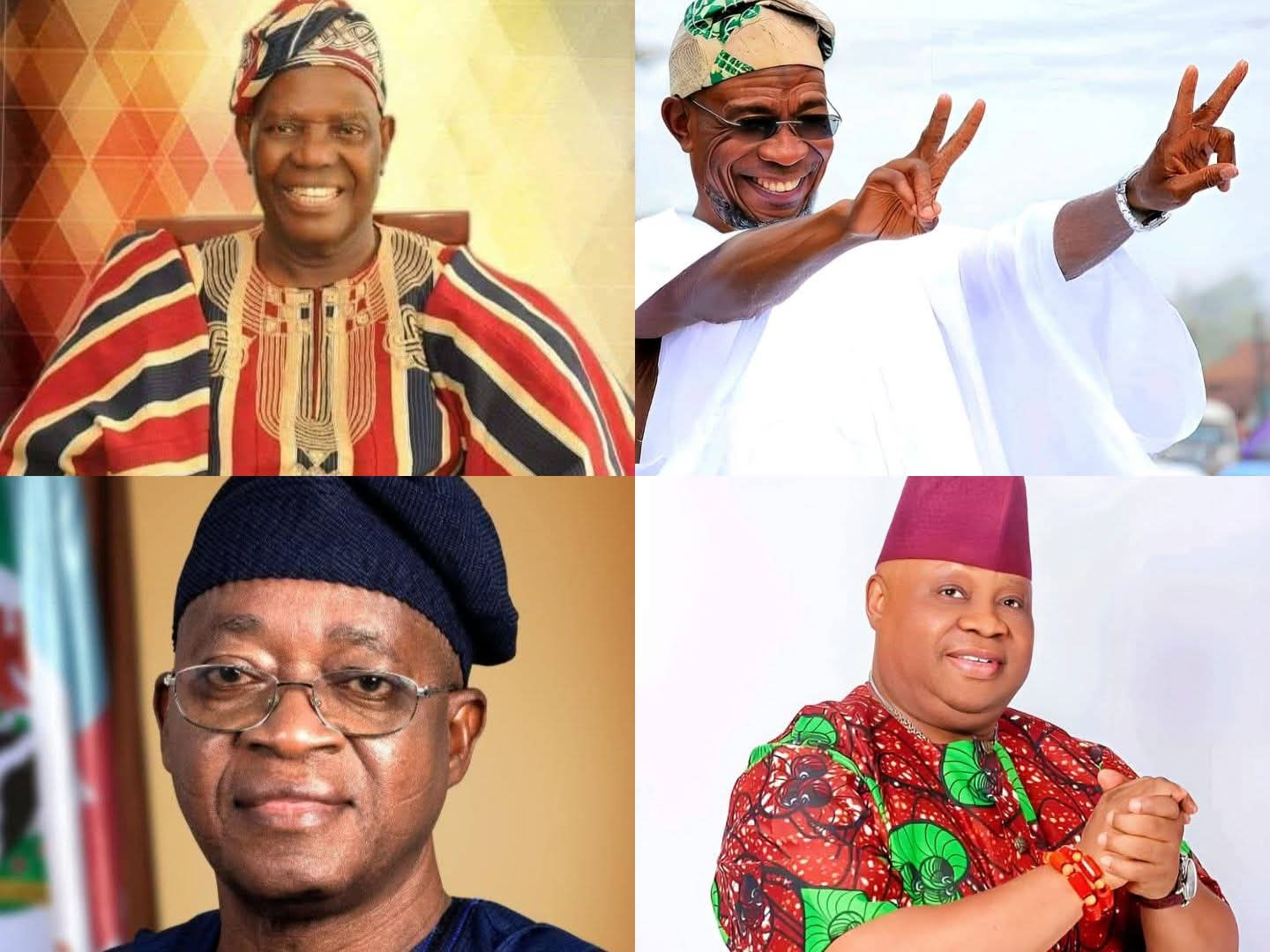
Chief Bisi Akande faced difficult financial circumstances and adopted a strategy that included dismissing some workers. Aregbesola later faced economic challenges and adopted a modulated salary arrangement intended to preserve employment while managing limited resources. Oyetola inherited unresolved salary issues, while Adeleke subsequently made their settlement a prominent part of his administration’s engagement with workers.
These experiences demonstrate that the consequences of economic decisions often extend beyond the tenure of the government that makes them.
They also show why leaders must consider the human impact of fiscal policies.
In my assessment, Aregbesola’s decision to pursue a salary-modulation arrangement rather than rely on mass dismissals represents an important distinction in the debate over his governance record.
Similarly, Oyetola’s administration had an opportunity to build trust by demonstrating visible progress in resolving inherited salary obligations. Greater progress in that area might have improved workers’ perceptions of his government, although it would be unreasonable to conclude that a different salary policy would necessarily have guaranteed his re-election.
The lesson is clear: governments must balance financial realities with the welfare of the people they serve.
Two Leaders, Two Approaches to Winning Public Support
There is an interesting comparison between Aregbesola and Adeleke.
Aregbesola built a substantial political following through social programmes, grassroots engagement and an approach to governance that many supporters considered accessible to ordinary people.
Adeleke, on the other hand, built public support through his personal connection with the electorate, campaign promises and the emphasis his administration placed on delivering visible results.
Although their political styles differ, both leaders demonstrate the importance of public perception and citizens’ expectations in democratic governance.
In particular, workers’ welfare remains a critical factor in the relationship between government and the electorate.
Public servants are voters, parents, community members and contributors to the wider economy. Decisions affecting their livelihoods can therefore have political consequences far beyond the immediate workplace.
Nevertheless, the ultimate measure of good governance should not be popularity alone. It should include financial responsibility, service delivery, respect for workers’ rights, transparency and the ability to sustain policies that improve people’s lives.
My Verdict: Why Aregbesola Remains a Benchmark for Governance in Osun
My argument is straightforward: when faced with an economic crisis, a government should explore every reasonable alternative before resorting to mass dismissals.
A salary-modulation arrangement may be controversial, and it can impose serious hardship on affected workers. It should never be celebrated without acknowledging those consequences or examining whether the arrangement was fair, necessary and temporary.
However, preserving jobs during a financial crisis is a consideration that deserves recognition.
From my perspective, Aregbesola’s decision to pursue modulated salary payments rather than mass dismissals remains an important reason his supporters regard his administration as a benchmark for governance in Osun State.
At the same time, the subsequent settlement of outstanding salary-related obligations under Adeleke demonstrates the importance of continuity and the responsibility of successor administrations to address unresolved issues.
No administration should be judged exclusively by its achievements, nor should its shortcomings be ignored. A balanced assessment must consider the circumstances under which decisions were made, the people affected and the eventual outcomes.
A Prayer for Osun State
I sincerely pray that Governor Ademola Adeleke will not encounter another severe economic downturn during his second term that would make it difficult to meet the state’s obligations to workers.
May his administration continue to strengthen public finances, protect workers’ welfare and improve the living conditions of the people of Osun State.
If Adeleke can build on the progress made in addressing inherited salary obligations while ensuring that public servants receive their salaries and entitlements consistently, he will have an opportunity to strengthen his own record of governance.
Ultimately, Osun State needs leaders who understand that economic challenges require difficult decisions, but that those decisions must be guided by compassion, fairness and accountability.
For me, the enduring lesson of the debate over sacking workers versus modulated salary payments is that responsible leadership must seek to protect livelihoods even when resources are limited. This is why I continue to regard Ogbeni Rauf Aregbesola’s approach to preserving public-sector employment during an economic crisis as an important part of his legacy in Osun State.
Leave a Reply