
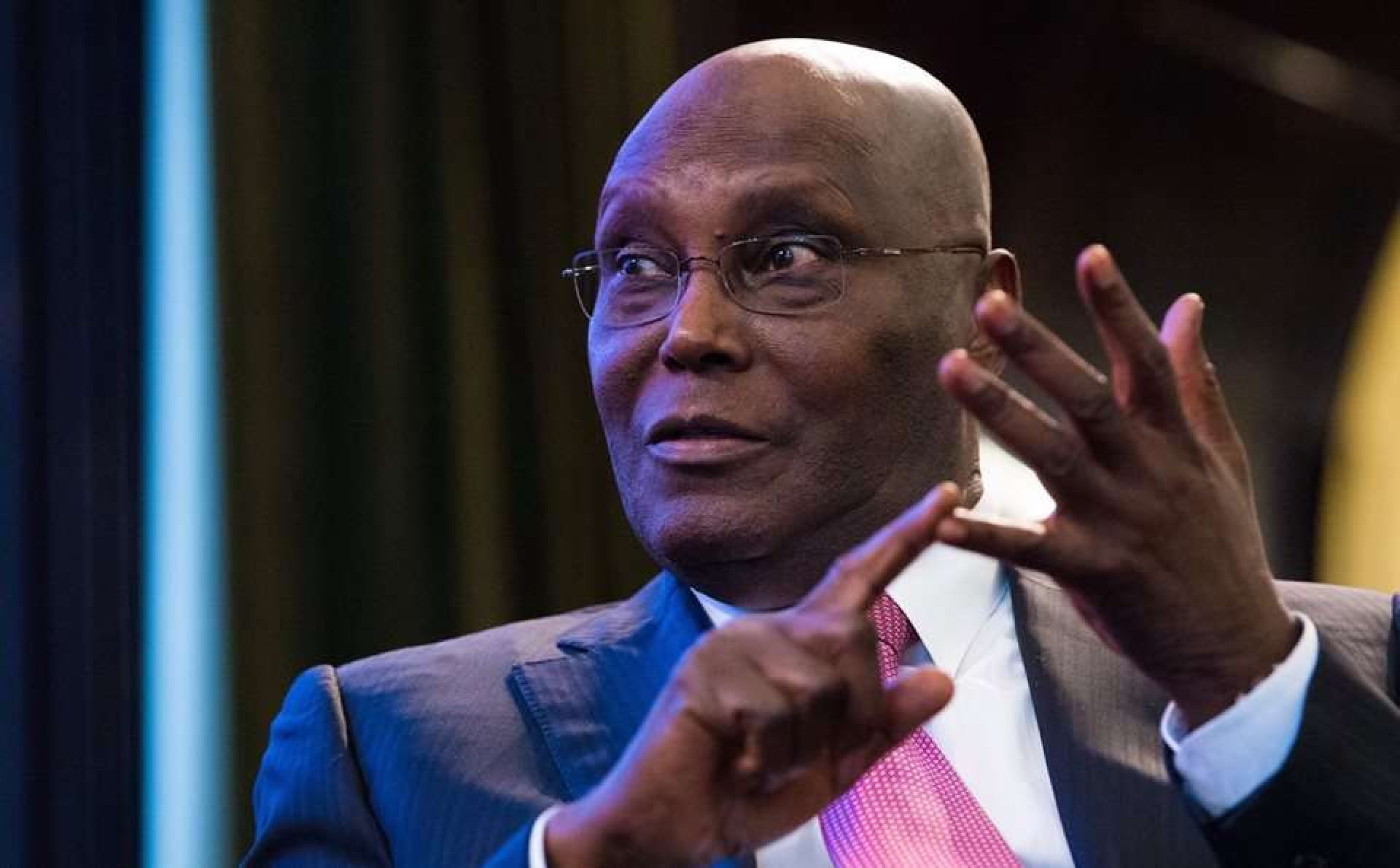
The Federal Government has challenged former Vice President Atiku Abubakar’s promise to reopen Nigeria’s land borders if elected president in 2027, insisting that the country’s major land borders are already open to legitimate trade and movement.
The Minister of Interior, Olubunmi Tunji-Ojo, said Atiku’s position was based on an inaccurate portrayal of the current status and history of Nigeria’s land borders.
Atiku, the presidential candidate of the African Democratic Congress (ADC), had promised during recent political engagements to reopen Nigeria’s land borders, including those linking the country with Benin Republic, Cameroon, Chad and Niger Republic.
The former vice president argued that restrictions on cross-border trade had negatively affected businesses, particularly in northern communities where many residents depend on trans-border commerce for their livelihoods.
He said reopening the borders would help restore legitimate trade and economic activities while creating opportunities for young people and businesses operating along Nigeria’s international corridors.
However, Tunji-Ojo, who supervises the Nigeria Immigration Service, said the premise that Nigeria’s borders remained closed was incorrect.
According to the minister, several major land borders had already been reopened under successive administrations. He recalled that Seme, Illela, Maigatari and Mfum were reopened on December 16, 2020, while Idiroko and Ikom were reopened for goods and services in April 2022.
He also said Kamba and Tsamiya border crossings in Kebbi State, linking Nigeria with Niger Republic and Benin Republic respectively, were reopened under the current administration in February 2026.
Tunji-Ojo further explained that some border restrictions had nothing to do with the trade policy often associated with Nigeria’s 2019 land-border closure.
He specifically cited the Banki and Amchidé crossings along the Cameroon border, explaining that their closure was driven by security concerns linked to Boko Haram insurgency rather than the 2019 trade policy. He said some of the crossings were subsequently reopened following joint military and stabilisation efforts involving Nigeria and neighbouring countries.
The minister acknowledged, however, that not every border crossing is currently operating without restrictions. He said tighter controls remain necessary in areas affected by banditry or residual insurgent activities, arguing that reopening such crossings without adequate security could expose traders and border communities to greater risks.
The Presidency also criticised Atiku’s pledge, saying the real policy question should not be whether Nigeria’s borders are open, but how the country can maintain legitimate movement and commerce while preventing criminals and terrorist groups from exploiting international crossings.
President Bola Tinubu’s Special Adviser on Media and Public Communication, Sunday Dare, said most of Nigeria’s land borders had been reopened since March 2024 and that the government had continued to restore additional crossings.
The Presidency cited the reopening of the Kamba border in Kebbi State in February 2026 as part of the administration’s efforts to improve cross-border economic activity and relations with neighbouring countries.
Dare challenged Atiku to clarify which specific borders he intends to reopen if elected and to explain what existing controls he would remove and what safeguards he would introduce to prevent terrorism, arms trafficking, smuggling, human trafficking and other transnational crimes.
The Presidency stressed that an open border should not mean an uncontrolled border, arguing that modern border management requires immigration checks, customs administration, intelligence sharing, surveillance technology and coordinated security operations.
It also linked effective border management to Nigeria’s wider security situation, particularly the threats posed by terrorism and organised crime around the Sahel and Lake Chad regions.
The Federal Government therefore urged political contenders in the 2027 election to present clear and detailed policies on border security, trade and regional cooperation rather than relying on campaign slogans.
Tunji-Ojo similarly challenged Atiku to present any new border-management proposal he may have, including how it would differ from the government’s existing approach.
The dispute has consequently shifted attention from the simple question of whether Nigeria’s borders are “open” or “closed” to the broader issue of how the country can balance cross-border trade and economic opportunities with national security.
With the 2027 presidential election approaching, the border debate is likely to remain part of the wider political argument over trade, security, regional integration and the economic wellbeing of communities along Nigeria’s international borders.
Leave a Reply