
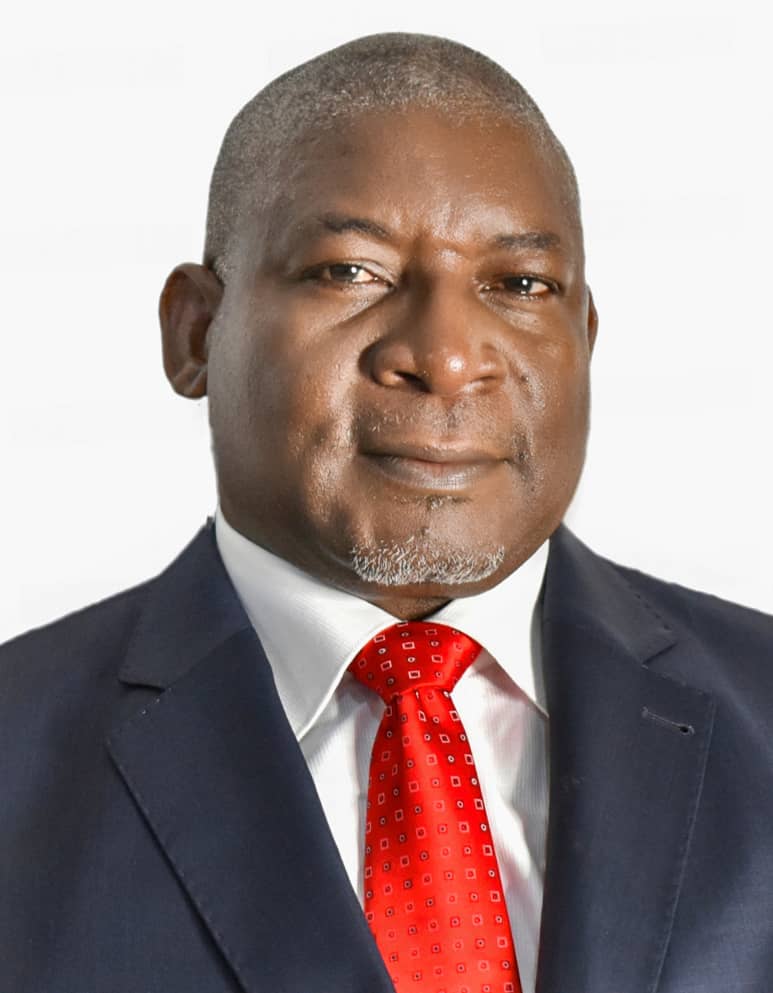
Nigeria’s Auditor-General for the Federation, Shaakaa Chira, has raised concerns over the inability of the Federal Government to provide sufficient evidence confirming that ₦33.75 billion released as cash transfers reached genuine beneficiaries across the country.
The concern was contained in the Auditor-General’s 2024 Annual Report on Non-Compliance and Internal Control Weaknesses in Ministries, Departments and Agencies of the Federal Government. The report examined transactions handled by the National Cash Transfer Office (NCTO) during the 2023 financial year.
According to the audit report, electronic transfers amounting to ₦33.751 billion were made to 3,295,207 households and beneficiaries registered through the National Social Register and enrolled on the National Beneficiary Register across 35 states.
However, auditors said they could not properly authenticate the payments because important details needed to establish who received the funds were not made available for examination.
The report noted that the payment vouchers did not contain complete information about the beneficiaries. It also stated that the Remita statement required to compare the people who actually received the money with those listed on the National Social Register and National Beneficiary Register was not presented to the auditors.
The absence of the records, according to the Auditor-General, made it difficult to determine whether the beneficiaries who received the payments were genuine.
The audit process was further complicated by difficulties in obtaining the relevant payment records. The report said efforts by auditors to gain access to the Remita statement were unsuccessful, with accounts staff at the National Cash Transfer Office allegedly obstructing access to the documents.
The Auditor-General consequently identified possible loss of public funds and payments to ineligible or fictitious beneficiaries among the risks associated with the transaction.
As part of its recommendations, the audit report called on the National Programme Manager to account for the ₦33.75 billion before the Public Accounts Committees of the National Assembly and provide evidence showing that the money was received by the intended beneficiaries.
It further recommended that any amount that could not be satisfactorily accounted for should be recovered and remitted to the Treasury.
The report also noted that the management of the National Cash Transfer Office did not respond to the audit query raised over the payment.
Beyond the ₦33.75 billion cash transfers, the audit uncovered several other financial and control concerns involving the office.
One of the findings involved ₦36.744 billion paid through 215 payment vouchers in December 2023 without the required pre-payment audit or internal audit checks. Rather than being subjected to the necessary checks before payment, the vouchers were reportedly examined only after the funds had been released.
The auditors warned that such a process could expose public funds to possible misapplication or diversion and recommended that the money be properly accounted for before the National Assembly.
Another ₦4.616 billion involving 101 payments was also queried because the National Cash Transfer Office failed to present the relevant paid vouchers for examination.
The audit further flagged ₦350.18 million disbursed to state coordinators for the enrolment of unbanked beneficiaries. Although documents covering a large portion of the funds were presented, the auditors said ₦350.18 million remained without adequate supporting documentation.
The documents submitted were also described as insufficiently detailed, with several expected records, including beneficiary lists, enrolment reports, attendance registers, photographs of activities and acknowledgements of payments, not attached to the vouchers.
The Auditor-General recommended that the ₦350.18 million be recovered and paid into the Treasury if the funds could not be properly accounted for.
Another issue involved ₦393.71 million reportedly returned by nine State Cash Transfer Units after enrolment exercises could not be conducted due to insecurity, disasters and other circumstances.
Although the National Cash Transfer Office said the money had been returned to the Treasury, auditors said there was no documentation confirming that the funds had actually been credited to the Consolidated Revenue Fund.
The report also raised questions over ₦280.42 million paid as mobilisation advances to payment service providers without evidence of Advance Payment Guarantees or adequate proof that due process was followed in selecting the providers.
Taken together, the findings highlight concerns about documentation, verification and internal controls surrounding the management of funds under Nigeria’s social protection programme.
The National Cash Transfer Programme is designed to provide financial support to poor and vulnerable households and forms part of Nigeria’s broader social safety-net system. The programme has also received substantial financing through an $800 million World Bank facility approved in December 2021.
According to the audit report, cumulative disbursements under the facility had reached approximately $744.61 million, representing about 93.1 per cent of the approved facility.
The latest findings do not by themselves establish that the ₦33.75 billion was stolen or that all the beneficiaries were fictitious. Rather, the central concern raised by the Auditor-General is that the available documentation was inadequate to independently verify that the funds reached the intended genuine beneficiaries.
The matter is therefore expected to attract further scrutiny as the National Assembly’s Public Accounts Committees consider the audit recommendations and demand explanations and supporting records from the officials responsible for the programme.
Leave a Reply