
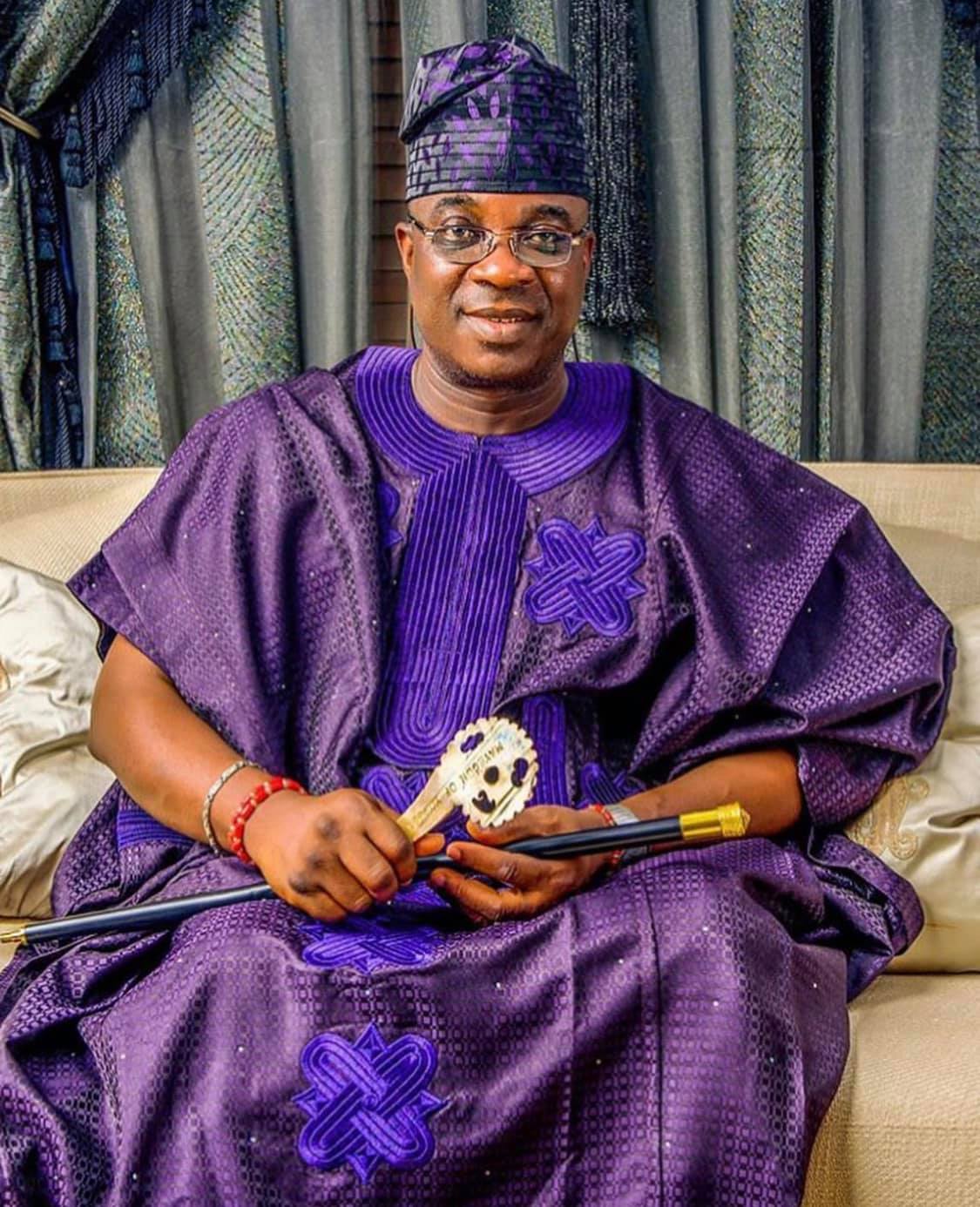
How K1 De Ultimate transformed a traditional Yoruba sound into a modern musical institution
By Durotoye Abiodun Ayinde
In the colourful and fascinating history of Nigerian music, few musicians have been able to sustain relevance, command a massive following and influence generations of performers the way King Wasiu Ayinde Marshal, popularly known as K1 De Ultimate, has done.
For more than four decades, Wasiu Ayinde has remained one of the most recognisable faces of Fuji music. His journey from a young boy fascinated by music in Lagos to becoming one of the most celebrated figures in Yoruba popular culture is a story of talent, discipline, innovation, ambition and perseverance.
He did not invent Fuji music. That historical credit is associated with the pioneering work of Sikiru Ayinde Barrister, whose development and popularisation of Fuji transformed the earlier Were/Ajisari tradition into a major Nigerian musical genre. But Wasiu Ayinde became one of the artists who demonstrated just how far Fuji could travel, how much it could evolve and how widely it could be accepted.
That is perhaps the most important part of his story.
He inherited Fuji, but he did not leave it exactly the way he found it.
THE BOY WHO FELL IN LOVE WITH MUSIC
Wasiu Ayinde was born on March 3, 1957, in Agarawu, Lagos State, and has roots in Ijebu-Ode, Ogun State.
His passion for music reportedly began when he was about eight years old. Despite initial resistance from his parents, the young Wasiu remained attracted to music and performance. By his teenage years, he had already participated in and won local musical competitions.
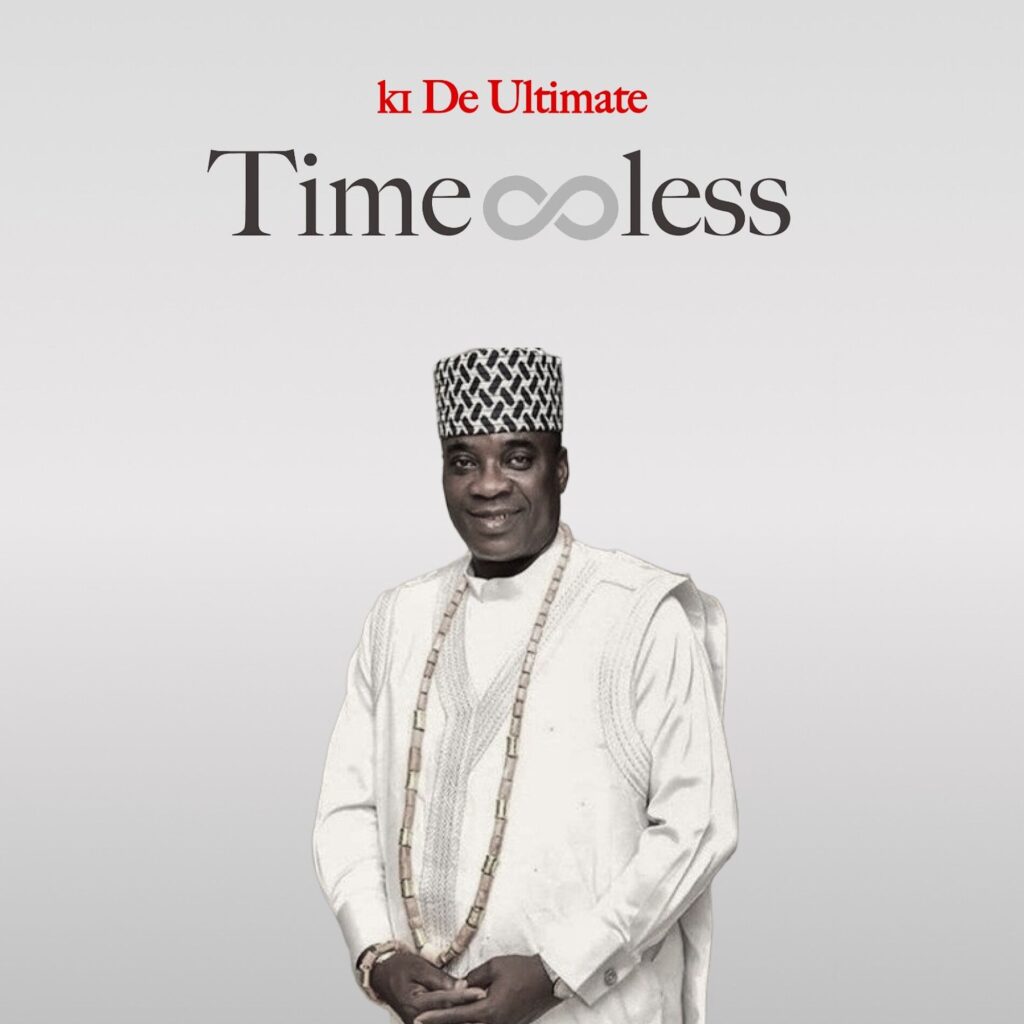
His early years were important because they revealed a quality that would later define his career: determination.
Music was not simply a hobby to him. It was a calling.
Eventually, his path brought him into the orbit of the man who would become his mentor, Alhaji Sikiru Ayinde Barrister.
THE BARRISTER SCHOOL
Wasiu became associated with Barrister’s Supreme Fuji Commanders in the 1970s. Accounts of his career describe him initially performing supporting duties before becoming increasingly involved in the musical activities of the band.
That apprenticeship was crucial.
Barrister was already an important force in the development of Fuji. Under his influence, Wasiu was exposed to the discipline of band organisation, Yoruba musical traditions, Islamic musical roots, lyrical composition, percussion and the demanding relationship between a performer and his audience.
But the young Wasiu was not destined to remain simply a member of another man’s band.
He was learning.
He was observing.
And, eventually, he was preparing to create his own musical identity.
In a 2025 interview, Wasiu himself reflected on his relationship with Barrister, describing the late Fuji pioneer as someone who had played an important role in his development.
That relationship between master and protégé remains one of the important chapters in the history of modern Fuji.

TALAZO ’84: THE RECORD THAT CHANGED EVERYTHING
Wasiu Ayinde’s career entered another dimension in the early 1980s.
His early solo work included Iba, while Talazo ’84 became the recording most strongly associated with his breakthrough and emergence as a major Fuji star.
The significance of Talazo ’84 went beyond commercial success.
It represented the emergence of a new musical personality.

Wasiu’s Fuji was energetic, youthful, expansive and willing to experiment. He retained the essential rhythmic and vocal identity of Fuji while introducing sounds and arrangements that helped broaden its appeal.
For many young listeners, Fuji suddenly sounded different.
It was still unmistakably Fuji.
But it was becoming something bigger.
THE MAN WHO OPENED THE DOOR TO NEW SOUNDS
One of Wasiu Ayinde’s most frequently noted contributions to Fuji was his incorporation of instruments and musical influences that had not traditionally occupied the same position within the genre.
Keyboard, guitar and saxophone became part of the sound associated with his modern Fuji presentation. His music also incorporated influences from other Nigerian and international styles.
This was significant because music genres survive partly through their ability to respond to changing generations.
Wasiu understood that.
Instead of treating tradition as something that could never change, he demonstrated that tradition could be preserved while its presentation evolved.
The drums remained.
The Yoruba language remained.
The praise singing remained.
The call-and-response remained.
The cultural references remained.
But around these traditional foundations came new instrumentation, new arrangements, new performance techniques and new ways of presenting Fuji to an increasingly diverse audience.
This became one of the defining characteristics of the K1 De Ultimate sound.

FROM LOCAL STAGES TO INTERNATIONAL AUDIENCES
Another important chapter in Wasiu Ayinde’s career was his international expansion.
He began touring outside Nigeria during the 1980s, performing in Europe and North America. His international performances continued over the years, helping introduce Fuji to audiences who might previously have had little exposure to the genre.
One particularly important milestone came when he performed at the WOMAD Festival, an international festival devoted to music, arts and dance from different parts of the world. Sources identify his appearance as the first Fuji performance at the festival.
That was more than another concert.
It was a cultural statement.
It demonstrated that a musical form deeply rooted in Yoruba society could stand on an international stage without losing its identity.
The message was clear:
Fuji could travel.
FUJI AS CULTURE
To understand Wasiu Ayinde’s influence, one must understand that Fuji is more than rhythm.
Fuji carries history.
It carries language.
It carries praise poetry.
It carries social commentary.
It carries Yoruba humour and wisdom.
It carries religious and cultural influences.
It can praise an individual in one moment and address society in another.
This is one reason Fuji has remained such an important part of Yoruba popular culture.
Wasiu Ayinde understood the communicative power of the genre and used it extensively.
His lyrics have often touched on family, friendship, success, human behaviour, social relationships, culture and contemporary life.
The Fuji musician therefore becomes more than an entertainer. He becomes a storyteller.
And the audience becomes part of the story.
THE ART OF ORIKI AND PRAISE SINGING
One of the most fascinating aspects of Wasiu Ayinde’s music is his mastery of Yoruba verbal artistry.
The ability to praise, tease, admonish, advise and entertain through carefully constructed Yoruba expressions is central to the traditional musical culture from which Fuji developed.
Wasiu has used this tradition to build musical performances capable of acknowledging individuals, families, communities and institutions.
For the Yoruba listener, hearing a musician correctly deploy a person’s lineage, achievements, praise names and historical references is not merely entertainment.
It is cultural recognition.
It is memory.
It is identity.
A BRIDGE BETWEEN GENERATIONS
Perhaps one of Wasiu Ayinde’s greatest contributions is his ability to connect generations.
Older Fuji listeners could recognise the traditions inherited from the pioneers.
Younger listeners could connect with the modern arrangements, energy and contemporary themes.
That ability to exist between generations helped keep Fuji relevant.
His influence can be seen in the careers of younger musicians.
Fuji stars who emerged after him have acknowledged his influence. Wasiu Alabi Pasuma, for example, has spoken about being inspired by Talazo ’84 and the impact Wasiu Ayinde had on his decision to pursue music professionally.
This is how musical legacies are created.
A musician records songs.
Another musician listens.
The second musician becomes inspired.
He develops his own sound.
A new generation listens to him.
And the chain continues.
A MENTOR TO THE NEXT GENERATION
Wasiu Ayinde’s career has also been marked by his relationship with younger performers.
He has been described as a mentor and influence on younger Fuji musicians, while some of his protégés have gone on to develop their own identities within the genre.
His influence is therefore not measured only by the number of albums he has released or concerts he has performed.
It can also be measured by the musicians who came after him.
A true musical institution is not simply an artist with many fans.
It is an artist whose presence changes what becomes possible for those who follow.
HIS PLACE IN THE HISTORY OF FUJI
It is important to put Wasiu Ayinde’s achievement in its proper historical context.
Fuji existed before him.
The genre’s history includes the Were/Ajisari tradition and the pioneering work of musicians such as Sikiru Ayinde Barrister and other early Fuji performers.
But every important musical era produces artists who take an established form and give it a new direction.
Wasiu Ayinde became one of those figures.
His contribution was not the creation of Fuji from nothing.
His contribution was transformation.
He helped make Fuji sound modern.
He helped make Fuji fashionable among younger audiences.
He helped place Fuji on international stages.
He expanded its instrumentation.
He developed a distinctive performance identity.
And he became an important bridge between the older generation of Fuji musicians and those who came after.
THE MAYEGUN OF YORUBALAND
The cultural importance of Wasiu Ayinde’s career was further recognised in January 2020 when he was installed as Mayegun of Yorubaland by the late Alaafin of Oyo, Oba Lamidi Adeyemi III. The Guardian reported that the honour recognised his contribution to entertainment and media.
The title gave traditional recognition to what the music industry had already demonstrated over many years: Wasiu Ayinde had become more than a popular musician.
He had become a cultural figure.
In an interview following his installation, he spoke about using the position to contribute to society, particularly in relation to young people and unity.
NATIONAL RECOGNITION
In 2022, Wasiu Ayinde was among the Nigerians recognised with national honours, receiving the Member of the Order of the Niger (MON).
The recognition added another dimension to a career that had already accumulated musical, cultural and traditional honours.
For an artist whose career began with a childhood fascination with music, the journey was extraordinary.
FIVE DECADES ON STAGE
By 2022, Wasiu Ayinde’s career had reached another remarkable milestone: approximately 50 years of performing.
At a Fuji: A Opera event that year, he was celebrated with an Icon Award, with the occasion also marking his 50th anniversary on stage.
Fifty years is a long time in entertainment.
Musical tastes change.
Artists come and go.
New technologies emerge.
New genres become fashionable.
Audiences change.
Yet Wasiu Ayinde continued to command attention.
That longevity is itself part of his legacy.
THE BUSINESS OF STAYING RELEVANT
One reason for his longevity is his willingness to adapt.
Wasiu Ayinde has never presented himself as an artist trapped in a particular decade.
From vinyl-era recordings to modern digital platforms, from local social gatherings to international concerts, he has continued to operate within changing entertainment environments.
His career demonstrates an important lesson about cultural music:
Tradition does not necessarily mean refusing change.
Sometimes, the best way to preserve tradition is to allow it to evolve.
MORE THAN A FUJI SINGER
To describe Wasiu Ayinde simply as a Fuji musician may therefore be an understatement.
He is an entertainer.
He is a bandleader.
He is a cultural ambassador.
He is a custodian of Yoruba musical expression.
He is a mentor.
And, above all, he is an artist who has spent decades negotiating the delicate space between tradition and modernity.
His music has travelled from neighbourhood stages in Lagos to major international venues.
His songs have moved from physical records to the digital age.
His audience has expanded from local Fuji enthusiasts to listeners around the world.
THE CONTINUING LEGACY
The greatest test of an artist’s legacy is what remains after the applause.
For Wasiu Ayinde, the answer can be found in the musicians he influenced, the audiences he created, the sound he developed and the space he helped create for Fuji in contemporary Nigerian entertainment.
His career also demonstrates the importance of mentorship.
Barrister helped shape the young Wasiu.
Wasiu subsequently became an influence on younger musicians.
The musical baton continues to move from one generation to another.
That is how culture survives.
CONCLUSION: THE MAN WHO CHANGED THE FACE OF FUJI
Wasiu Ayinde did not create Fuji music.
But he helped change its face.
He took a genre deeply connected to Yoruba musical traditions and demonstrated that it could embrace keyboards, guitars, saxophones and other contemporary influences without losing its identity.
He took Fuji beyond familiar local boundaries and onto international stages.
He helped make the genre attractive to younger generations.
He inspired musicians who would later become stars in their own right.
He turned his personal sound into a recognisable musical brand.
And he transformed himself from a young apprentice in Barrister’s musical establishment into one of the most important figures in the modern history of Fuji.
The story of Fuji cannot be told without Sikiru Ayinde Barrister and the pioneers who established its foundation.
But neither can the story of modern Fuji be told without Wasiu Ayinde Marshal.
His journey is the story of a musician who understood that music must live in its time while remembering where it came from.
That may ultimately be the secret of his remarkable longevity.
Wasiu Ayinde inherited Fuji.
He refined it.
He expanded it.
He internationalised it.
And he helped give it a new face.
For that reason, K1 De Ultimate’s name will remain firmly written in the history of Nigerian music—and particularly in the continuing story of Fuji.
How K1 De Ultimate transformed a traditional Yoruba sound into a modern musical institution
By Durotoye Abiodun Ayinde
In the colourful and fascinating history of Nigerian music, few musicians have been able to sustain relevance, command a massive following and influence generations of performers the way King Wasiu Ayinde Marshal, popularly known as K1 De Ultimate, has done.
For more than four decades, Wasiu Ayinde has remained one of the most recognisable faces of Fuji music. His journey from a young boy fascinated by music in Lagos to becoming one of the most celebrated figures in Yoruba popular culture is a story of talent, discipline, innovation, ambition and perseverance.
He did not invent Fuji music. That historical credit is associated with the pioneering work of Sikiru Ayinde Barrister, whose development and popularisation of Fuji transformed the earlier Were/Ajisari tradition into a major Nigerian musical genre. But Wasiu Ayinde became one of the artists who demonstrated just how far Fuji could travel, how much it could evolve and how widely it could be accepted.
That is perhaps the most important part of his story.
He inherited Fuji, but he did not leave it exactly the way he found it.
THE BOY WHO FELL IN LOVE WITH MUSIC
Wasiu Ayinde was born on March 3, 1957, in Agarawu, Lagos State, and has roots in Ijebu-Ode, Ogun State.
His passion for music reportedly began when he was about eight years old. Despite initial resistance from his parents, the young Wasiu remained attracted to music and performance. By his teenage years, he had already participated in and won local musical competitions.
His early years were important because they revealed a quality that would later define his career: determination.
Music was not simply a hobby to him. It was a calling.
Eventually, his path brought him into the orbit of the man who would become his mentor, Alhaji Sikiru Ayinde Barrister.
THE BARRISTER SCHOOL
Wasiu became associated with Barrister’s Supreme Fuji Commanders in the 1970s. Accounts of his career describe him initially performing supporting duties before becoming increasingly involved in the musical activities of the band.
That apprenticeship was crucial.
Barrister was already an important force in the development of Fuji. Under his influence, Wasiu was exposed to the discipline of band organisation, Yoruba musical traditions, Islamic musical roots, lyrical composition, percussion and the demanding relationship between a performer and his audience.
But the young Wasiu was not destined to remain simply a member of another man’s band.
He was learning.
He was observing.
And, eventually, he was preparing to create his own musical identity.
In a 2025 interview, Wasiu himself reflected on his relationship with Barrister, describing the late Fuji pioneer as someone who had played an important role in his development.
That relationship between master and protégé remains one of the important chapters in the history of modern Fuji.
TALAZO ’84: THE RECORD THAT CHANGED EVERYTHING
Wasiu Ayinde’s career entered another dimension in the early 1980s.
His early solo work included Iba, while Talazo ’84 became the recording most strongly associated with his breakthrough and emergence as a major Fuji star.
The significance of Talazo ’84 went beyond commercial success.
It represented the emergence of a new musical personality.
Wasiu’s Fuji was energetic, youthful, expansive and willing to experiment. He retained the essential rhythmic and vocal identity of Fuji while introducing sounds and arrangements that helped broaden its appeal.
For many young listeners, Fuji suddenly sounded different.
It was still unmistakably Fuji.
But it was becoming something bigger.
THE MAN WHO OPENED THE DOOR TO NEW SOUNDS
One of Wasiu Ayinde’s most frequently noted contributions to Fuji was his incorporation of instruments and musical influences that had not traditionally occupied the same position within the genre.
Keyboard, guitar and saxophone became part of the sound associated with his modern Fuji presentation. His music also incorporated influences from other Nigerian and international styles.
This was significant because music genres survive partly through their ability to respond to changing generations.
Wasiu understood that.
Instead of treating tradition as something that could never change, he demonstrated that tradition could be preserved while its presentation evolved.
The drums remained.
The Yoruba language remained.
The praise singing remained.
The call-and-response remained.
The cultural references remained.
But around these traditional foundations came new instrumentation, new arrangements, new performance techniques and new ways of presenting Fuji to an increasingly diverse audience.
This became one of the defining characteristics of the K1 De Ultimate sound.
FROM LOCAL STAGES TO INTERNATIONAL AUDIENCES
Another important chapter in Wasiu Ayinde’s career was his international expansion.
He began touring outside Nigeria during the 1980s, performing in Europe and North America. His international performances continued over the years, helping introduce Fuji to audiences who might previously have had little exposure to the genre.
One particularly important milestone came when he performed at the WOMAD Festival, an international festival devoted to music, arts and dance from different parts of the world. Sources identify his appearance as the first Fuji performance at the festival.
That was more than another concert.
It was a cultural statement.
It demonstrated that a musical form deeply rooted in Yoruba society could stand on an international stage without losing its identity.
The message was clear:
Fuji could travel.
FUJI AS CULTURE
To understand Wasiu Ayinde’s influence, one must understand that Fuji is more than rhythm.
Fuji carries history.
It carries language.
It carries praise poetry.
It carries social commentary.
It carries Yoruba humour and wisdom.
It carries religious and cultural influences.
It can praise an individual in one moment and address society in another.
This is one reason Fuji has remained such an important part of Yoruba popular culture.
Wasiu Ayinde understood the communicative power of the genre and used it extensively.
His lyrics have often touched on family, friendship, success, human behaviour, social relationships, culture and contemporary life.
The Fuji musician therefore becomes more than an entertainer. He becomes a storyteller.
And the audience becomes part of the story.
THE ART OF ORIKI AND PRAISE SINGING
One of the most fascinating aspects of Wasiu Ayinde’s music is his mastery of Yoruba verbal artistry.
The ability to praise, tease, admonish, advise and entertain through carefully constructed Yoruba expressions is central to the traditional musical culture from which Fuji developed.
Wasiu has used this tradition to build musical performances capable of acknowledging individuals, families, communities and institutions.
For the Yoruba listener, hearing a musician correctly deploy a person’s lineage, achievements, praise names and historical references is not merely entertainment.
It is cultural recognition.
It is memory.
It is identity.
A BRIDGE BETWEEN GENERATIONS
Perhaps one of Wasiu Ayinde’s greatest contributions is his ability to connect generations.
Older Fuji listeners could recognise the traditions inherited from the pioneers.
Younger listeners could connect with the modern arrangements, energy and contemporary themes.
That ability to exist between generations helped keep Fuji relevant.
His influence can be seen in the careers of younger musicians.
Fuji stars who emerged after him have acknowledged his influence. Wasiu Alabi Pasuma, for example, has spoken about being inspired by Talazo ’84 and the impact Wasiu Ayinde had on his decision to pursue music professionally.
This is how musical legacies are created.
A musician records songs.
Another musician listens.
The second musician becomes inspired.
He develops his own sound.
A new generation listens to him.
And the chain continues.
A MENTOR TO THE NEXT GENERATION
Wasiu Ayinde’s career has also been marked by his relationship with younger performers.
He has been described as a mentor and influence on younger Fuji musicians, while some of his protégés have gone on to develop their own identities within the genre.
His influence is therefore not measured only by the number of albums he has released or concerts he has performed.
It can also be measured by the musicians who came after him.
A true musical institution is not simply an artist with many fans.
It is an artist whose presence changes what becomes possible for those who follow.
HIS PLACE IN THE HISTORY OF FUJI
It is important to put Wasiu Ayinde’s achievement in its proper historical context.
Fuji existed before him.
The genre’s history includes the Were/Ajisari tradition and the pioneering work of musicians such as Sikiru Ayinde Barrister and other early Fuji performers.
But every important musical era produces artists who take an established form and give it a new direction.
Wasiu Ayinde became one of those figures.
His contribution was not the creation of Fuji from nothing.
His contribution was transformation.
He helped make Fuji sound modern.
He helped make Fuji fashionable among younger audiences.
He helped place Fuji on international stages.
He expanded its instrumentation.
He developed a distinctive performance identity.
And he became an important bridge between the older generation of Fuji musicians and those who came after.
THE MAYEGUN OF YORUBALAND
The cultural importance of Wasiu Ayinde’s career was further recognised in January 2020 when he was installed as Mayegun of Yorubaland by the late Alaafin of Oyo, Oba Lamidi Adeyemi III. The Guardian reported that the honour recognised his contribution to entertainment and media.
The title gave traditional recognition to what the music industry had already demonstrated over many years: Wasiu Ayinde had become more than a popular musician.
He had become a cultural figure.
In an interview following his installation, he spoke about using the position to contribute to society, particularly in relation to young people and unity.
NATIONAL RECOGNITION
In 2022, Wasiu Ayinde was among the Nigerians recognised with national honours, receiving the Member of the Order of the Niger (MON).
The recognition added another dimension to a career that had already accumulated musical, cultural and traditional honours.
For an artist whose career began with a childhood fascination with music, the journey was extraordinary.
FIVE DECADES ON STAGE
By 2022, Wasiu Ayinde’s career had reached another remarkable milestone: approximately 50 years of performing.
At a Fuji: A Opera event that year, he was celebrated with an Icon Award, with the occasion also marking his 50th anniversary on stage.
Fifty years is a long time in entertainment.
Musical tastes change.
Artists come and go.
New technologies emerge.
New genres become fashionable.
Audiences change.
Yet Wasiu Ayinde continued to command attention.
That longevity is itself part of his legacy.
THE BUSINESS OF STAYING RELEVANT
One reason for his longevity is his willingness to adapt.
Wasiu Ayinde has never presented himself as an artist trapped in a particular decade.
From vinyl-era recordings to modern digital platforms, from local social gatherings to international concerts, he has continued to operate within changing entertainment environments.
His career demonstrates an important lesson about cultural music:
Tradition does not necessarily mean refusing change.
Sometimes, the best way to preserve tradition is to allow it to evolve.
MORE THAN A FUJI SINGER
To describe Wasiu Ayinde simply as a Fuji musician may therefore be an understatement.
He is an entertainer.
He is a bandleader.
He is a cultural ambassador.
He is a custodian of Yoruba musical expression.
He is a mentor.
And, above all, he is an artist who has spent decades negotiating the delicate space between tradition and modernity.
His music has travelled from neighbourhood stages in Lagos to major international venues.
His songs have moved from physical records to the digital age.
His audience has expanded from local Fuji enthusiasts to listeners around the world.
THE CONTINUING LEGACY
The greatest test of an artist’s legacy is what remains after the applause.
For Wasiu Ayinde, the answer can be found in the musicians he influenced, the audiences he created, the sound he developed and the space he helped create for Fuji in contemporary Nigerian entertainment.
His career also demonstrates the importance of mentorship.
Barrister helped shape the young Wasiu.
Wasiu subsequently became an influence on younger musicians.
The musical baton continues to move from one generation to another.
That is how culture survives.
CONCLUSION: THE MAN WHO CHANGED THE FACE OF FUJI
Wasiu Ayinde did not create Fuji music.
But he helped change its face.
He took a genre deeply connected to Yoruba musical traditions and demonstrated that it could embrace keyboards, guitars, saxophones and other contemporary influences without losing its identity.
He took Fuji beyond familiar local boundaries and onto international stages.
He helped make the genre attractive to younger generations.
He inspired musicians who would later become stars in their own right.
He turned his personal sound into a recognisable musical brand.
And he transformed himself from a young apprentice in Barrister’s musical establishment into one of the most important figures in the modern history of Fuji.
The story of Fuji cannot be told without Sikiru Ayinde Barrister and the pioneers who established its foundation.
But neither can the story of modern Fuji be told without Wasiu Ayinde Marshal.
His journey is the story of a musician who understood that music must live in its time while remembering where it came from.
That may ultimately be the secret of his remarkable longevity.
Wasiu Ayinde inherited Fuji.
He refined it.
He expanded it.
He internationalised it.
And he helped give it a new face.
For that reason, K1 De Ultimate’s name will remain firmly written in the history of Nigerian music—and particularly in the continuing story of Fuji.
Wasiu Ayinde: not merely a Fuji musician, but one of the architects of modern Fuji musiWasiu Ayinde: not merely a Fuji musician, but one of the architects of modern Fuji music
Leave a Reply