

By: Folorunso Fatai Adisa
Every intellectual tradition keeps a roll of its elders, and every so often the roll is read aloud at a graveside. In Nigerian communication scholarship, three names now sit together on one sorrowful page: Femi Sonaike, Lai Oso and, with his passing, Idowu Sobowale. The circle has closed a little further, and those of us who stand outside it are left to describe what it enclosed.
It would be fair to say that the University of Lagos gave Nigeria some of its finest minds in media, journalism and communication. It would be just as fair to say that the same tradition shaped the intellectual culture of the Department of Mass Communication at Moshood Abiola Polytechnic. The proof is in the men who carried it there. Sobowale was a friend to Sonaike and a teacher to Oso, and between the three of them they made a department’s character out of learning, conviction and a seriousness about the craft of public communication.
An institution is often built first by an act of recognition. It was Sonaike and Sobowale who found the young Lai Oso at the University of Lagos, saw what he would become and brought him to Ogun State Polytechnic, now Moshood Abiola Polytechnic. Oso repaid that judgement many times over. His lessons in Reporting and Graphics for National Diploma One students, and in World and African Politics for National Diploma Two, were encounters with a mind that could carry a student far beyond the lecture hall. Those who sat before him did not know that the door through which he entered their lives had been opened by Sobowale’s eye for talent. That is how teachers often leave their mark, through the minds they spot and release into other people’s classrooms.
My admiration for Professor Sobowale began long before I met him. I first knew him through reputation, and above all through the way Dr Sina Julius Aina spoke of him. Then we got to the programme and the late Prof Oso spoke highly of Prof Sobowale the more. Prof Oso was a man whose judgement I held in the highest regard, and his praise for Sobowale carried the weight of a considered verdict. I finally saw him in 2013 at the First Femi Sonaike Memorial Lecture, held at the Department of Mass Communication, MAPOLY. It was one of those rare moments when a name long held in reverence acquired a face, a voice and a human presence. He was neither smaller nor larger than the stories had made him; he was simply real, and kinder than reputation usually permits.
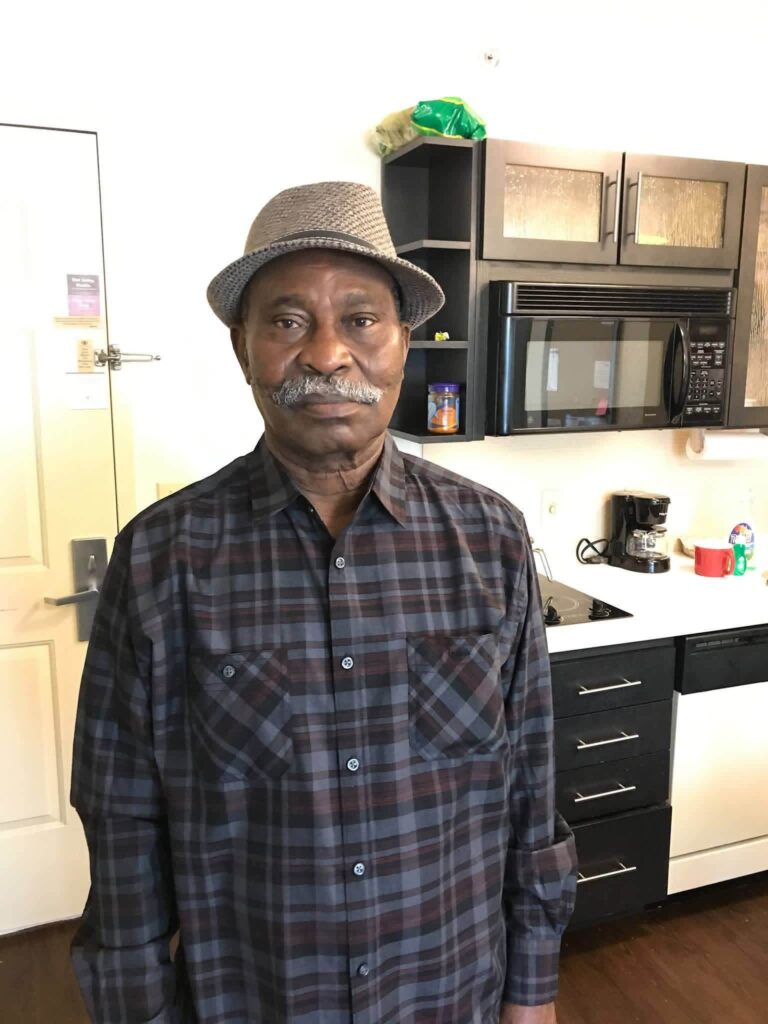
The last time I saw him remains fixed in my memory. To be in his company was to feel the depth of an intellect that needed no announcement, and I suspect the full measure of his legacy will take generations to appreciate. Death has a cruel gift for converting the present tense into the past. Only yesterday there remained the possibility of another conversation and another afternoon of listening.
A few days ago, I sat with Dr Omowe Wasiu Tejuoso, Head of the Department of Mass Communication at MAPOLY, and saw the imposing frame prepared in honour of the late Professor Lai Oso, destined for the department’s hallway. I was glad, and I told him so. A department that hangs its dead teachers where the living must walk past them has understood something about memory, and I thanked him for remembering a man whose influence on the field, and on so many lives within it, deserved to be made visible. Our conversation moved, as such conversations do, from Oso to Sonaike and then to Sobowale, whom we spoke of in the present tense, as one speaks of a man still within reach of a telephone call.
Today the news broke that he is gone. We had been discussing a tribute to one departed teacher, and the conversation had barely cooled when the third name crossed from the living to the remembered. I do not read meaning into the timing; I only record it, because it says something about how thin the partition is.
Today there is remembrance, and the unwelcome knowledge that no new chapter will be added to a life we are now obliged to narrate. His death is a grave loss to Ogun State, to Nigeria and to the community of scholars in communication and journalism. A repository of knowledge has gone silent, and a distinguished chapter of our intellectual history has closed. But the surest measure of a teacher is rarely found in the honours he collected or the books he leaves on the shelf. It is found in the minds he awakened, the younger scholars he encouraged and the generations who see the world differently because he once stood before them and taught.
Shakespeare gave us the farewell that comes most readily to the tongue at such a moment. In Hamlet, Horatio says it over his dead friend: “Good night, sweet prince.” Horatio is also the mourner who stays behind, charged with telling the story of the man he has lost. We are in his position now. We bid Professor Sobowale good night, but his scholarship will stay in the minds he shaped, his example in the lives he touched and his name in the history of a discipline to which he gave so much.
Eulogy tempts us to polish, and he would not have wanted a polished man. No life is free of imperfection, and we ought to remember his with the charity we hope others will one day extend to us. A life given to learning, teaching and the advancement of knowledge deserves to be remembered whole. The best tribute we can pay him is to keep the standards he embodied and to carry forward the torch he helped to light.
And when you see Femi Sonaike again, Professor, greet him for us. Find Lai Oso too, your younger colleague and protégé, and tell them that the world of communication and journalism misses them still. Tell them that another of their own has joined them, and that those of us left behind are struggling to find words equal to our grief. Tell them also that their classrooms have not emptied. Their lessons live in the minds they formed, in the institutions they helped to build and in the younger voices that still speak because they were once taught how.
Farewell, Professor Idowu Sobowale. You have taken your place among those who gave Nigerian communication scholarship its finest traditions. May the earth lie gently upon you, and may the generations who follow us go on pronouncing your name with the reverence it deserves.
Leave a Reply