
By Sao Olaribigbe
Behind every great band are musicians whose names may never appear on the front of an album, yet whose voices and performances become part of the music that millions remember.
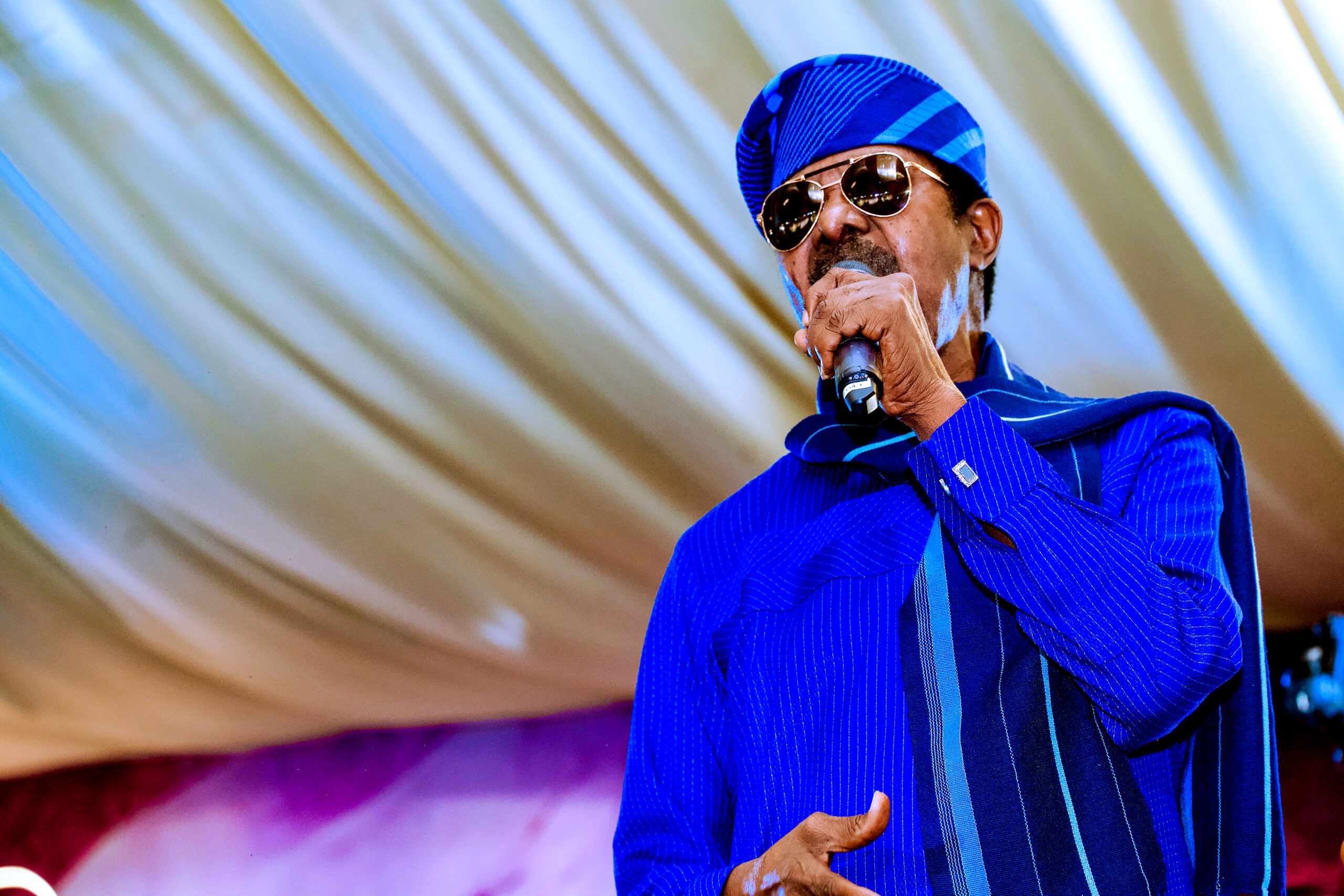
For more than three decades, Elder Femi Owomoyela was one of those musicians.
The grey-haired singer and dancer became a familiar face within King Sunny Adé’s African Beats, contributing his voice and stage presence to the sound that carried Nigerian juju music from Lagos to audiences around the world.
His contribution was not merely anecdotal. Music credits from the period document Owomoyela as a vocalist on several of King Sunny Adé’s recordings. He is listed among the vocalists on the internationally acclaimed 1982 album Juju Music, while later releases such as Aura also credit him as a vocalist.

From Osogbo to the World of Juju
Owomoyela’s story began in Ifon, although he and his half-brother, the legendary highlife musician Dr Orlando Owoh, grew up in Osogbo.
According to Owomoyela’s own account in a later interview, he left Osogbo in 1964 and travelled to Lagos to join Orlando Owoh’s Omimah Band. He spent approximately five years with the group before leaving following a disagreement with his older brother.
His departure did not end his musical journey.
Instead, it led him to another band and eventually to one of the most influential figures in African popular music.
Joining King Sunny Adé
Owomoyela subsequently joined the band of his former schoolmate, Sunday Adeniyi, better known as King Sunny Adé.
He did not immediately become one of the band’s recognised singers.
According to his account, he initially worked as an instrument handler or “packer”, helping to move and manage the band’s equipment. Over time, however, his abilities earned him a place among the group’s backing vocalists and performers.
The records of King Sunny Adé’s music confirm just how long his contribution lasted.
On Juju Music, released by Island Records in 1982, Femi Owomoyela is credited alongside Niyi Falaye, Jacob Ajakaye, Matthew Olojede, Tunde Demiola and other members of the African Beats vocal ensemble.
His name also appears in the credits of later King Sunny Adé recordings, including Aura, demonstrating that his involvement extended well beyond the band’s early international breakthrough.
A Career That Crossed Continents
For decades, Owomoyela travelled with the band as King Sunny Adé’s music reached audiences far beyond Nigeria.
The African Beats became one of the most internationally recognised Nigerian bands of the 1980s. Their tours and recordings helped introduce juju music to audiences in Europe, North America and other parts of the world.
For a performer who had started by handling instruments, the journey was remarkable.
He had gone from Osogbo to Lagos, from carrying equipment to standing on stage as one of the voices behind one of Africa’s best-known juju musicians.
The 2007 Dispute

But the later years of his association with the band were not without difficulties.
In an interview recorded years later, Owomoyela recounted that in February 2007, he and other long-serving members of the band approached King Sunny Adé concerning royalty payments.
According to his account, the disagreement eventually resulted in several veteran members being dismissed. Owomoyela said age was given as part of the explanation for their departure.
He subsequently appealed to influential individuals and traditional rulers in an attempt to resolve the disagreement, but, according to his account, the decision stood.
These details come principally from Owomoyela’s own recollection and should therefore be understood as his account of the dispute.
When the Musician Needed Help
The story later took another turn.
Owomoyela recalled that after experiencing financial difficulties following his departure from the band, he contacted King Sunny Adé seeking assistance.
According to his account, Sunny agreed to meet him at a Chinese restaurant in Lagos. Owomoyela travelled to the meeting but was reportedly told upon arrival that Sunny had not yet arrived.
On his way home, he said he was stopped and searched by plain-clothes police officers, who took ₦10,000 from him and left him with ₦300.
Frustrated by what had happened, Owomoyela said he sent a bitter text message to Sunny and that communication between them subsequently became strained.
The Recordings
Some time later, according to Owomoyela’s account, representatives of King Sunny Adé approached him concerning archival recordings in his possession.
He said he handed the recordings over without demanding a specific price, telling Sunny to determine what he believed they were worth.
Sunny subsequently invited him to Lagos for a personal meeting.
Even that journey was not without difficulty.
Owomoyela recalled that while travelling by public bus, thieves stole ₦4,000 from his pocket.
Nevertheless, he eventually reached Lagos and met King Sunny Adé.
According to his account, Sunny gave him ₦50,000.
It was a small episode in the much larger history of Nigerian popular music, but for Owomoyela it represented another chapter in a complicated relationship that had lasted decades.

A Brother Remembered in Song
Owomoyela’s connection to Orlando Owoh also remained part of his story.
According to the account supplied by his family and associates, Orlando later acknowledged his brother’s association with King Sunny Adé in song, singing words that referred to Femi Owomoyela and expressed gratitude to Sunny.
The connection between the two brothers is particularly interesting because they occupied important but different places in Nigerian popular music.
Orlando Owoh became one of the defining voices of Nigerian highlife and juju, while Femi became part of the ensemble that helped King Sunny Adé take juju music onto the international stage.
Remembering the Voices Behind the Stars
When the history of Nigerian music is written, attention naturally falls on the headline names: King Sunny Adé, Orlando Owoh, Ebenezer Obey, I.K. Dairo and other celebrated bandleaders.
But their music was never created by one person alone.
Behind the stars were guitarists, drummers, percussionists, dancers, singers, equipment handlers, road crew members and other performers whose contributions made the performances possible.
Femi Owomoyela belonged to that generation.
His name survives in the official credits of important King Sunny Adé recordings, including Juju Music, where he is documented as one of the band’s vocalists.
His story therefore deserves to be remembered not simply as that of “the old man behind King Sunny Adé”, but as that of a musician who spent decades contributing his voice to one of Nigeria’s most internationally influential musical ensembles.
He began as an instrument handler.
He became a backing vocalist.
He toured the world.
And for more than three decades, his voice formed part of the sound of King Sunny Adé’s African Beats.
Some musicians become stars. Others help create the sound that makes the stars unforgettable. Femi Owomoyela was one of them.
Sources
- King Sunny Adé, Juju Music (Island Records, 1982) — personnel credits listing Femi Owomoyela among the vocalists.
- A&M Records / On A&M Records, King Sunny Adé personnel archive, listing Femi Owomoyela as vocalist.
- AllMusic, Aura — recording personnel listing Femi Owomoyela as vocalist.
- NigbatiTV, interview with Elder Femi Owomoyela, 25 April 2022 — source for his personal recollections about Orlando Owoh, King Sunny Adé, his career and the later dispute.
. Soa Olaribigbe
Leave a Reply